What Is Hematite? The Stone Behind the Bracelet, Explained
Quick answer —Hematite is iron(III) oxide (Fe₂O₃), a dense, hard iron ore identified by its red-brown streak. The grounding and protective meaning attached to it is a real, centuries-old tradition, not a property of the mineral itself.
"What is hematite" is one of the most-searched questions about this stone, and most answers jump straight to grounding and chakras without covering the actual mineral first. Here is the geology, then the culture — in that order, because the order matters.
The mineral, plainly
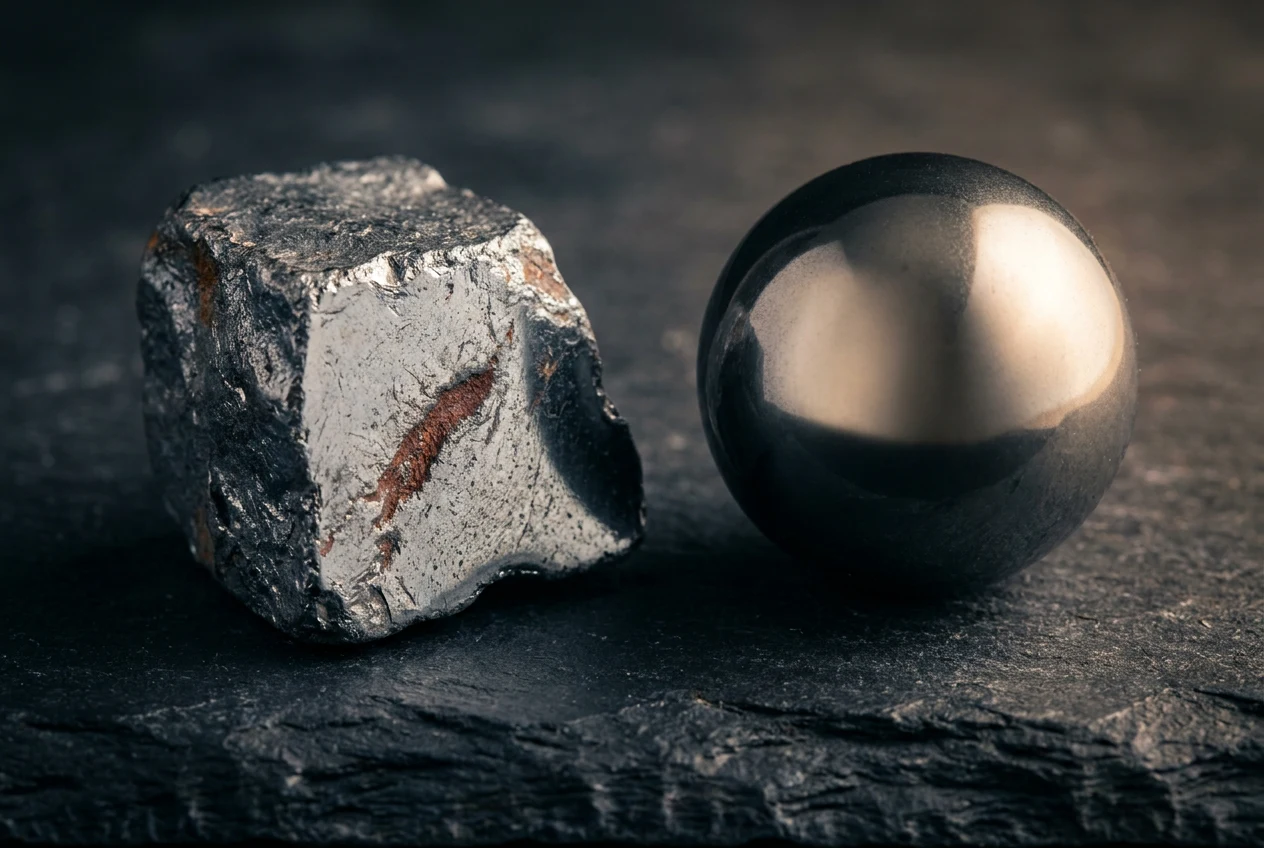
Hematite is iron(III) oxide — Fe₂O₃ — one of the most abundant iron ores on Earth. It forms in banded iron formations laid down in ancient oceans, in hydrothermal veins, and as a weathering product of other iron-bearing rock. It is one of the primary ores steel is made from, which is also why it sits at 5.5–6.5 on the Mohs hardness scale, roughly level with hardened steel, and why a real piece feels distinctly heavy for its size.
The name comes from the Greek haimatites lithos — "blood-like stone" — coined by the naturalist Theophrastus around 300 BCE. That is not a reference to its colour, which is a metallic black-grey. It is a reference to its streak: scratched against an unglazed surface, hematite leaves a deep red-brown mark, the same iron oxide that gives rust its colour. Mineralogists still use that streak test as a primary way to identify it.
Hematite is also why Mars looks red — the planet's surface dust is rich in iron oxide, the same compound. NASA's Opportunity rover landed in a region called Meridiani Planum specifically because orbital data showed grey, crystalline hematite there, evidence the site once held liquid water.
Jewellery vs. everything else hematite is used for
Long before it was a bracelet bead, hematite ground to powder was ochre and red pigment — used in cave paintings, burial rites, and body paint for tens of thousands of years. It is still mined industrially today, mostly as iron ore for steelmaking; jewellery-grade hematite is a small fraction of what is dug out of the ground.
As jewellery, it has been cut and polished since antiquity — Egyptian amulets, Mesopotamian cylinder seals — carried since for the grounding and protective meaning people have attached to it for centuries. That is a real, old tradition, and we will always call it tradition rather than dress it up as anything more.
How to tell real hematite from a coated imitation
- Weight. Iron oxide is dense. A "hematite" bead that feels light in hand is almost never the real mineral.
- Temperature. Genuine stone feels cool against skin on first contact and warms slowly. Dyed glass and resin warm up almost instantly.
- The streak test. A scratch on unglazed ceramic leaves red-brown on real hematite. We would not recommend testing jewellery you plan to keep wearing this way, but it is the reason the two-thousand-year-old "blood stone" name has stuck.
- Magnetism, read carefully. Natural hematite is only weakly magnetic. Anything marketed as strongly "magnetic hematite" is a man-made composite (often called hematine), not the natural mineral — see our magnetic hematite guide for the full distinction.
The bottom line
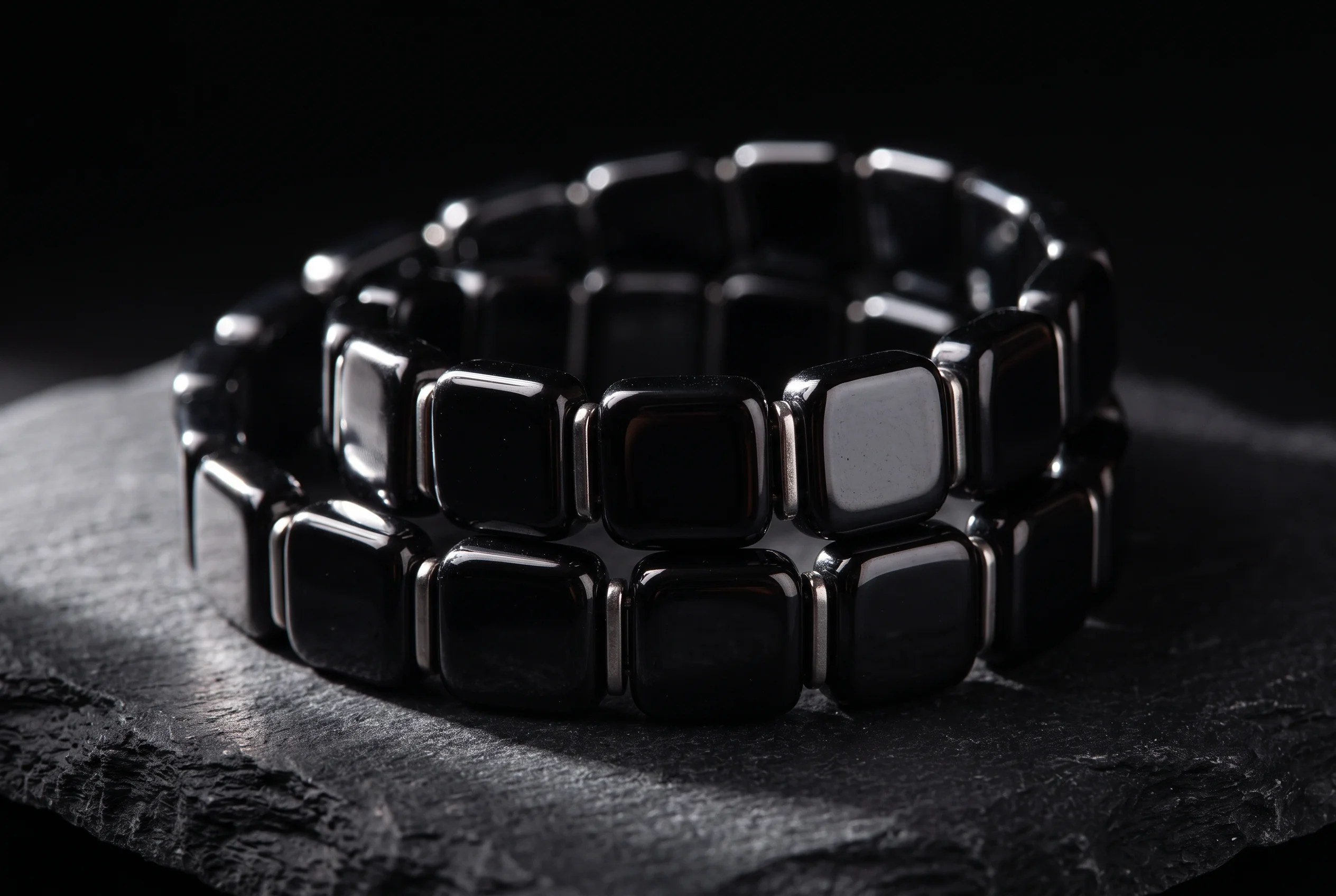
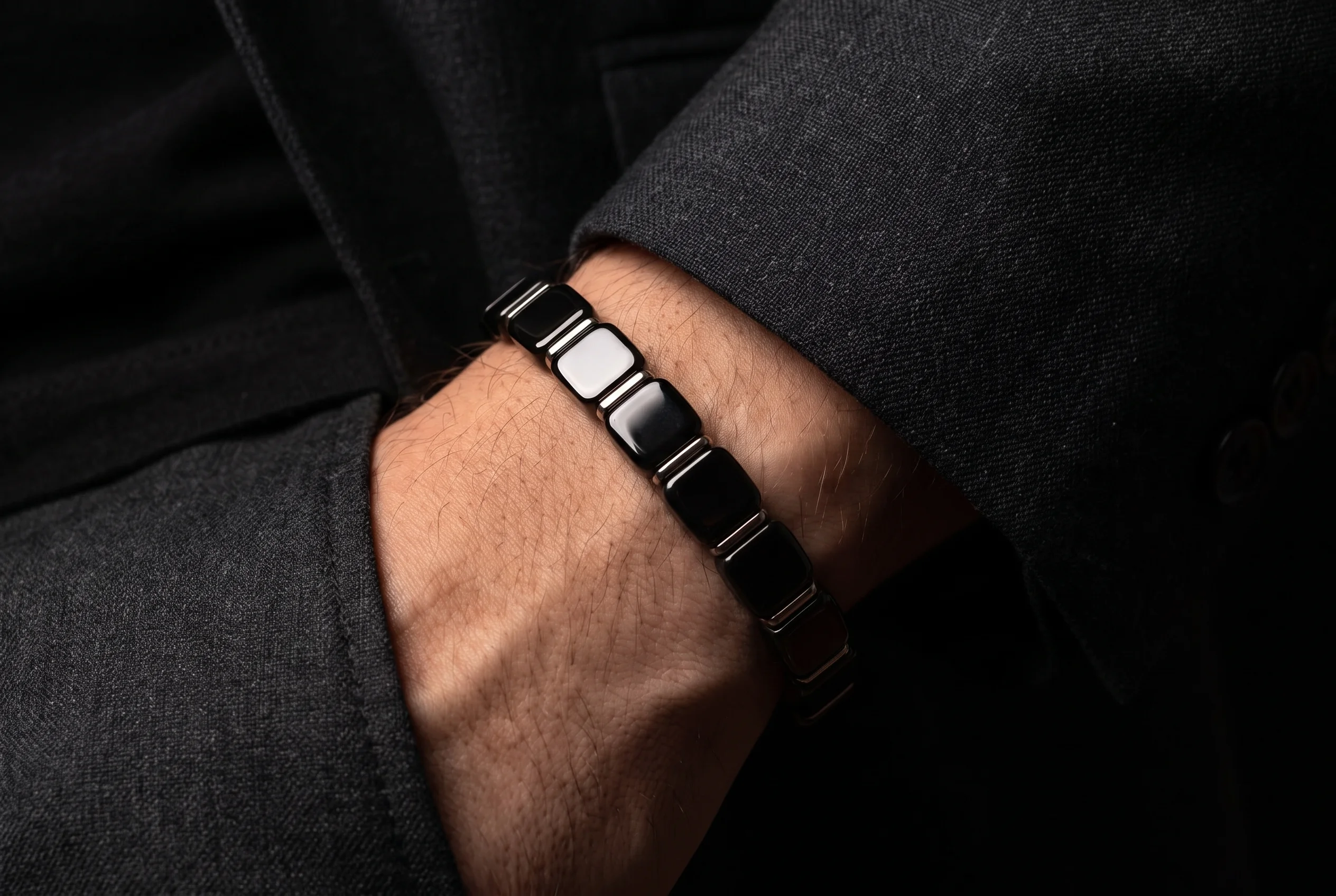
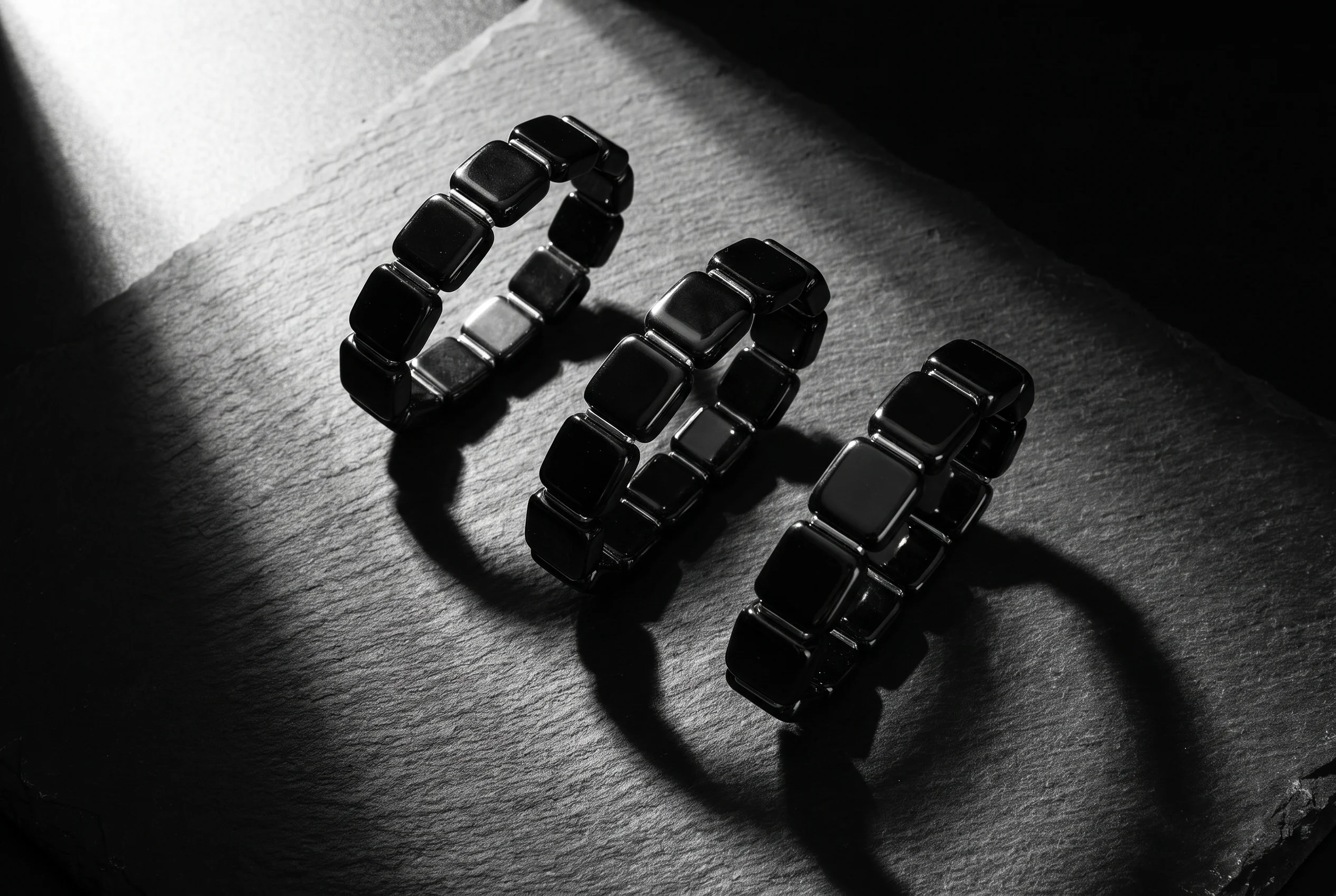
Hematite is a genuinely old, genuinely abundant iron ore with a five-thousand-year history as a worn stone — that is interesting enough on its own without needing embellishment. If you want to hold a piece of it, the Hematite Men's Bracelet is natural, polished hematite on a stretch elastic core, nothing plated or coated over the stone itself.
Free tracked shipping worldwide · Free fix for damaged, missing, or wrong items
Shop the collection