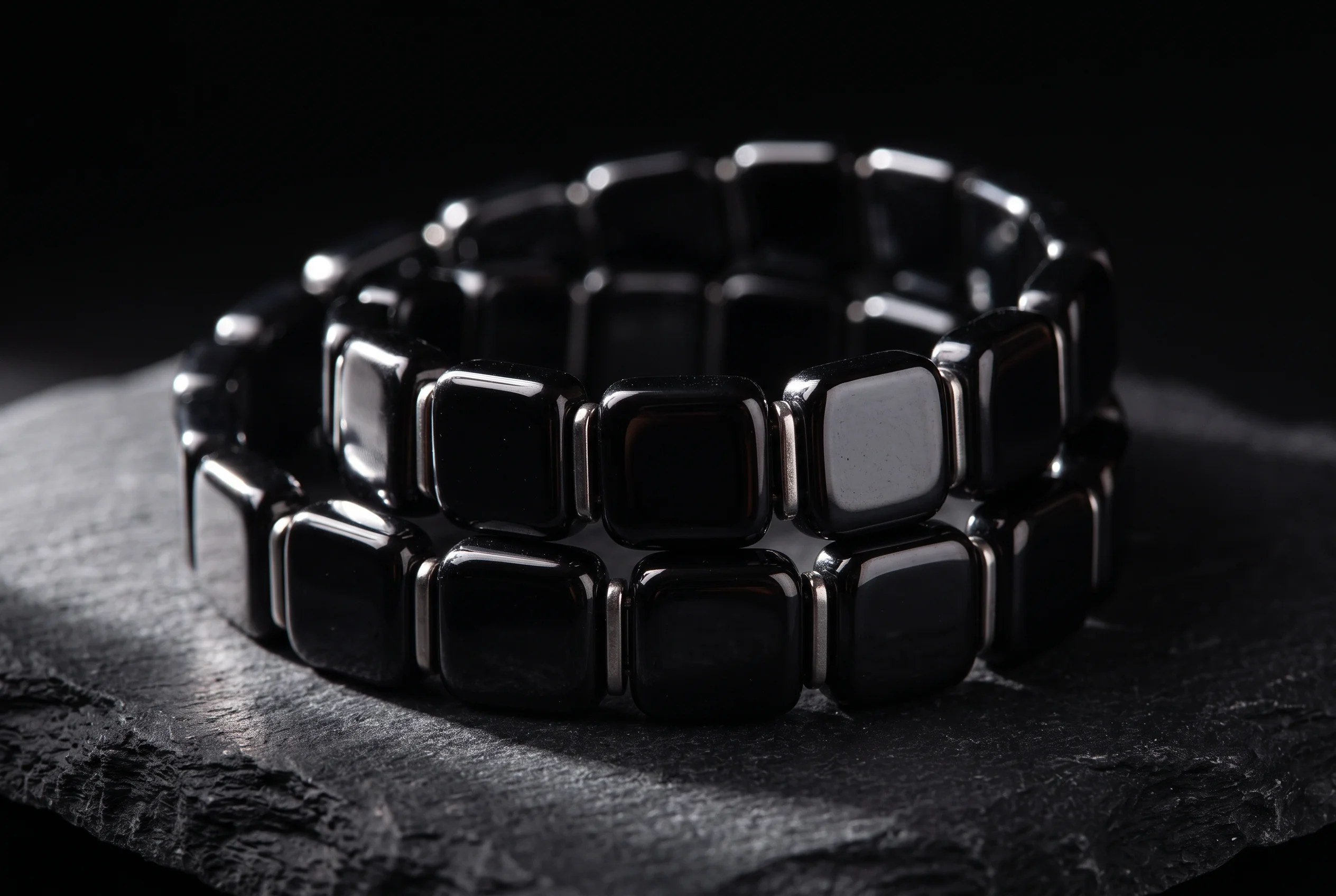
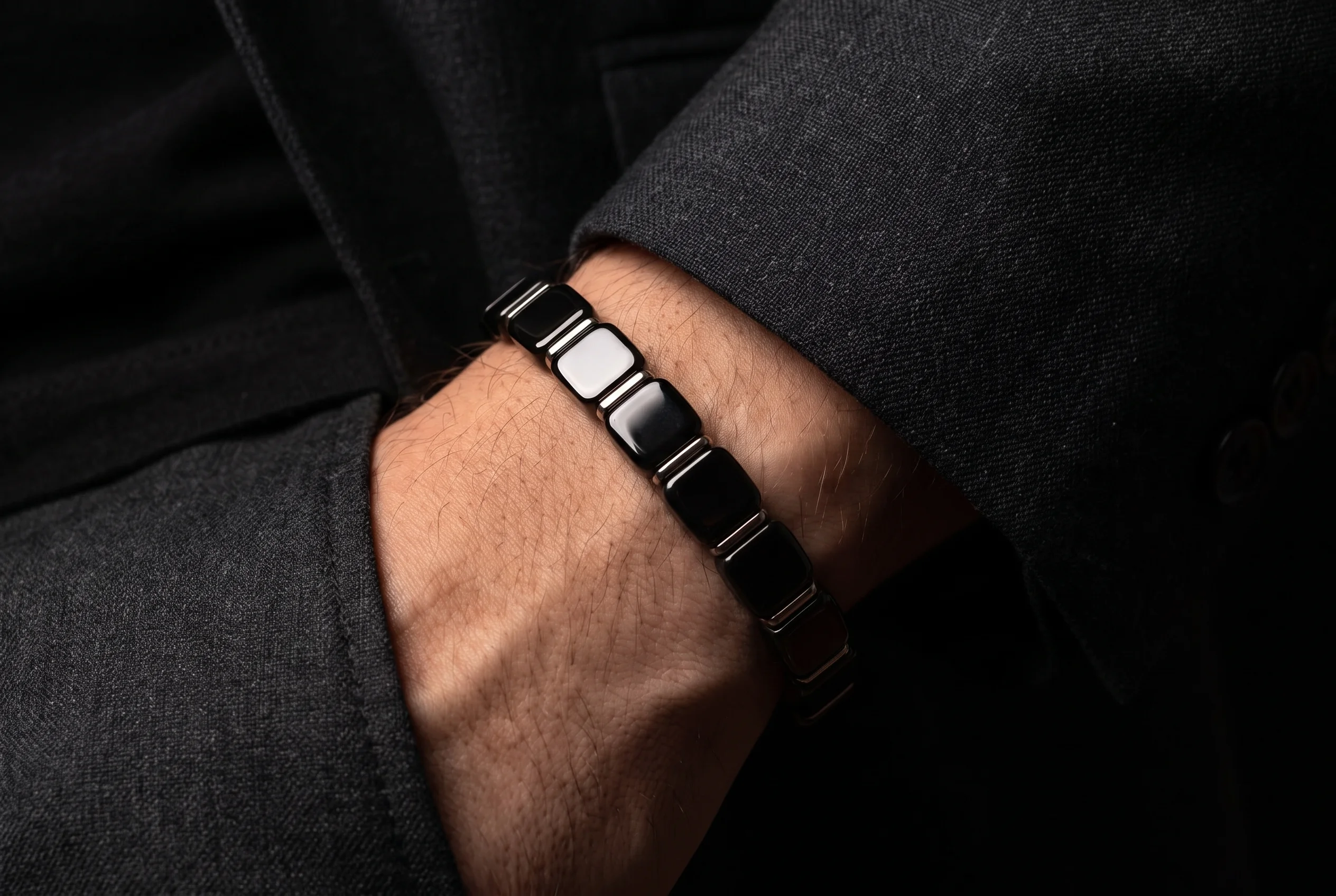
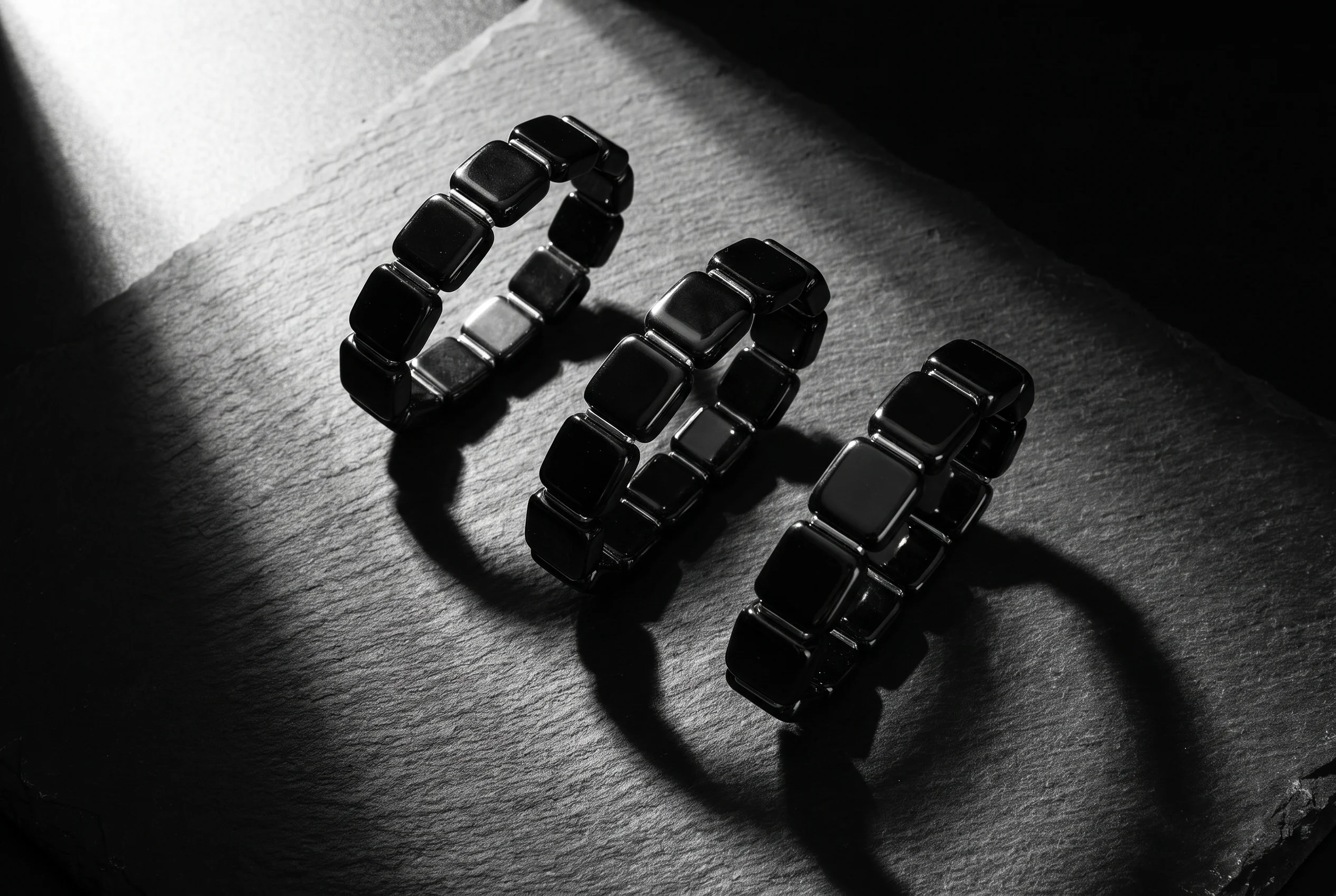
Magnetic Hematite Bracelet: What "Magnetic" Actually Means
Quick answer —Natural hematite is only weakly magnetic. A bracelet that snaps together strongly is almost always a man-made magnetic composite (often called hematine), not the natural stone.
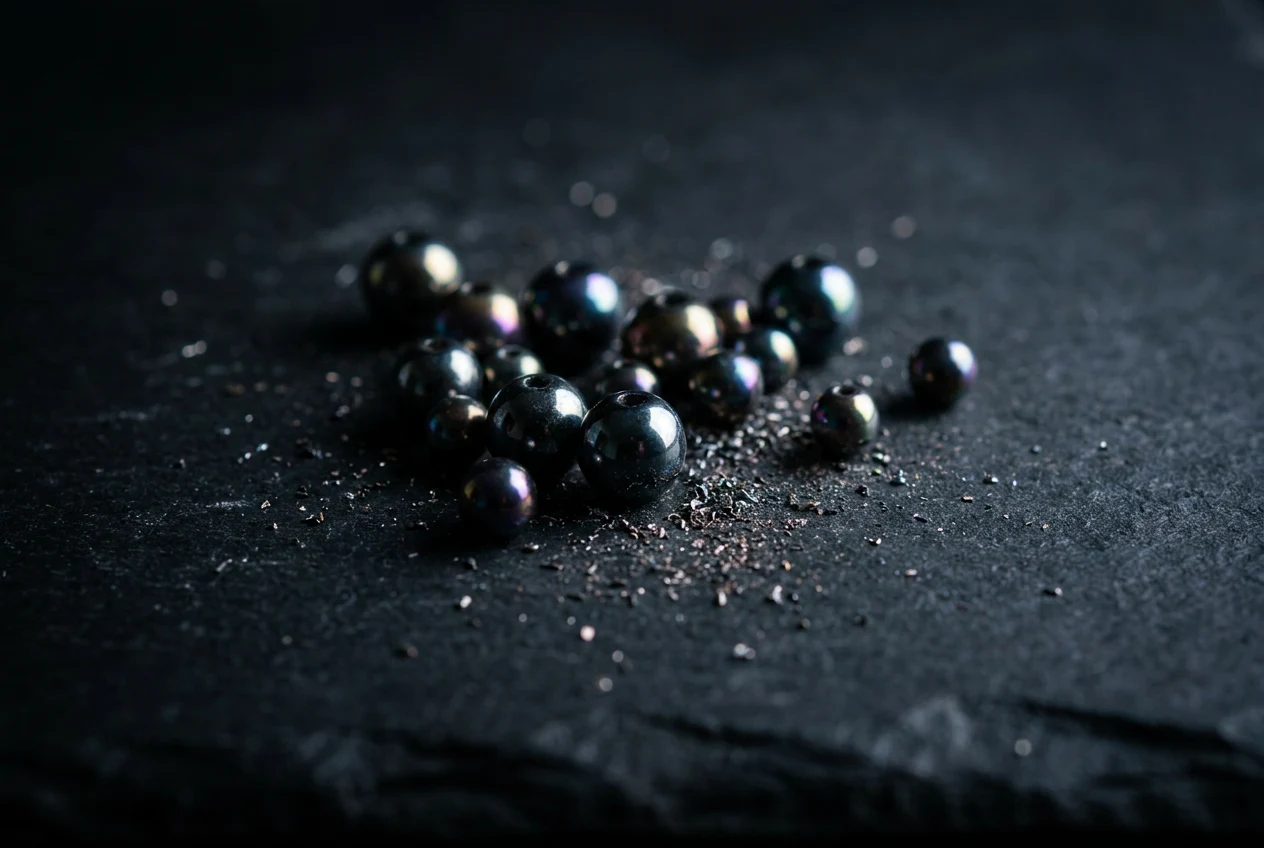
"Magnetic hematite bracelet" is searched constantly, and almost none of the listings that come up explain the one fact that actually matters: natural hematite is only weakly magnetic. If a bracelet snaps together like it has real magnets in it, you are not holding natural hematite. Here is what you are actually holding, and why that is not a problem as long as the listing tells you.
Natural hematite's real magnetism
Hematite is iron(III) oxide, Fe₂O₃. Chemically it is close to magnetite (Fe₃O₄), the strongly magnetic iron oxide, but the difference in oxidation state matters: magnetite is ferrimagnetic and pulls hard toward a magnet, while pure hematite is only weakly magnetic — antiferromagnetic under most conditions, with a faint magnetic response under specific circumstances. In practice, a genuine natural hematite bead will not snap to another bead or grab a fridge magnet with any real force.
So what is "magnetic hematite bracelet" actually made of?
What is sold under that name — and what makes beads visibly cluster and pull toward each other — is almost always a man-made composite, often called hematine or "hemalyke." It is manufactured by sintering iron oxide powder with a strong magnetic core, engineered specifically to be magnetic in a way the natural stone is not. It is not fake in the sense of being worthless; it is a genuine, deliberately engineered material. It is just not the natural mineral, and a lot of listings let the word "hematite" imply otherwise.
What we will not claim
Some sellers market magnetic hematite jewellery with implied therapeutic or "magnetic therapy" claims — pain relief, circulation, energy balance. We are not going to make any of those claims, and you should treat them with real scepticism wherever you see them: there is no accepted clinical evidence that wearing a magnet at bracelet-strength affects circulation or pain. Whatever reason you have for wanting a magnetic piece — the satisfying snap of the beads, the look, the tradition attached to hematite generally — is a fine reason on its own. It does not need a medical claim bolted onto it.
How to tell which one you are buying
- Test the pull. Hold two beads a few centimetres apart. If they visibly snap together, it is a magnetic composite, not natural hematite.
- Check the listing language. "Natural hematite" or "genuine hematite" should mean the mineral. "Magnetic hematite," "hematine," or "magnetic therapy hematite" means the engineered composite — a real product, just a different one.
- Weight and finish. Both look similar at a glance, so weight alone will not tell them apart reliably — the magnet test is the one that actually works.
What we sell, and what we tell you about it
Our Curved Hematite Ring is available in both a natural, non-magnetic finish and a magnetic hematine finish — and we say which is which on the product page rather than letting "hematite" do the implying. If a genuinely non-magnetic, natural piece is what you want, the Hematite Men's Bracelet and Hematite Band Ring are both solid natural stone with no magnetic core.
Free tracked shipping worldwide · Free fix for damaged, missing, or wrong items
Shop the collection