Hematite Properties: The Full Mineral Data Sheet
Quick answer —Hematite (Fe₂O₃) is a 5.5–6.5 Mohs-hardness iron oxide with a red-brown streak, a density around 5.3 g/cm³, and only weak natural magnetism — properties that make it identifiable, durable for jewellery, and easy to distinguish from imitations.
"Hematite properties" is searched by people who want the actual mineral data sheet, not the folklore. Here it is in one place — every figure verifiable, nothing attributed to tradition mixed in.
Chemical composition
Hematite is iron(III) oxide, chemical formula Fe₂O₃ — one of the most abundant iron ores on Earth, and one of the primary ores that steel is made from. It forms in banded iron formations laid down in ancient oceans, in hydrothermal veins, and as a weathering product of other iron-bearing rock.
Physical properties
- Hardness: 5.5–6.5 on the Mohs scale — level with hardened steel, harder than glass or a knife blade (both ~5.5).
- Density: approximately 5.26 g/cm³, notably dense for a non-metallic mineral — the physical reason a genuine piece feels heavier in hand than its size suggests.
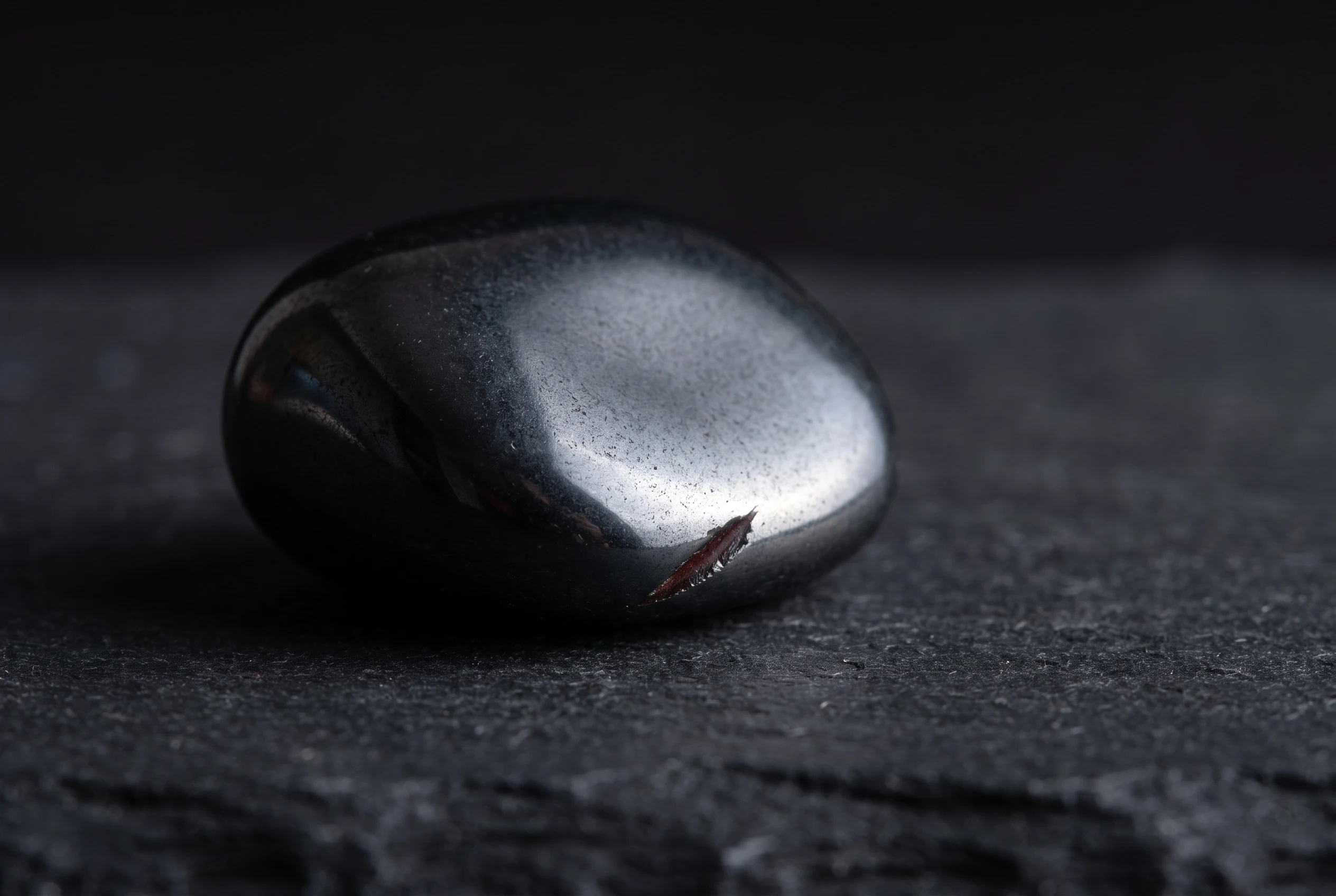
- Streak: red-brown, regardless of the surface color — the single most reliable way to identify genuine hematite, and the origin of its name (Greek haimatites lithos, "blood-like stone").
- Lustre: metallic to sub-metallic in its common polished form; duller and earthier in its ochre form.
- Color: steel-grey to black in its metallic form; red-brown in its earthier, ochre form. Same mineral, different presentation.
- Crystal system: trigonal (hexagonal); most jewellery-grade material is massive (non-crystalline) rather than showing visible crystal faces.
- Magnetism: only weakly magnetic under most conditions — antiferromagnetic, not the strong pull associated with "magnetic hematite" jewellery, which is almost always a man-made composite. See our full breakdown of magnetic hematite for that distinction.
Why these properties matter for jewellery specifically
The hardness (5.5–6.5) is what makes hematite viable for daily-wear jewellery without excessive scratching. The density is the tactile signature that distinguishes genuine stone from lightweight glass or resin imitations at a glance — literally in hand. The streak test is the single most reliable verification method available to anyone, not just a lab, which is unusually accessible for a mineral identification test. And the weak natural magnetism is the property most often misrepresented by sellers marketing composite "magnetic hematite" as the real mineral.
What these properties don't tell you
None of the above says anything about grounding, focus, protection, or any other meaning attached to the stone in crystal and spiritual tradition. That's a separate, real, and old tradition — see our guide to hematite's traditional meaning — but it's a cultural claim, not a mineral property, and we keep the two deliberately separate in everything we publish.
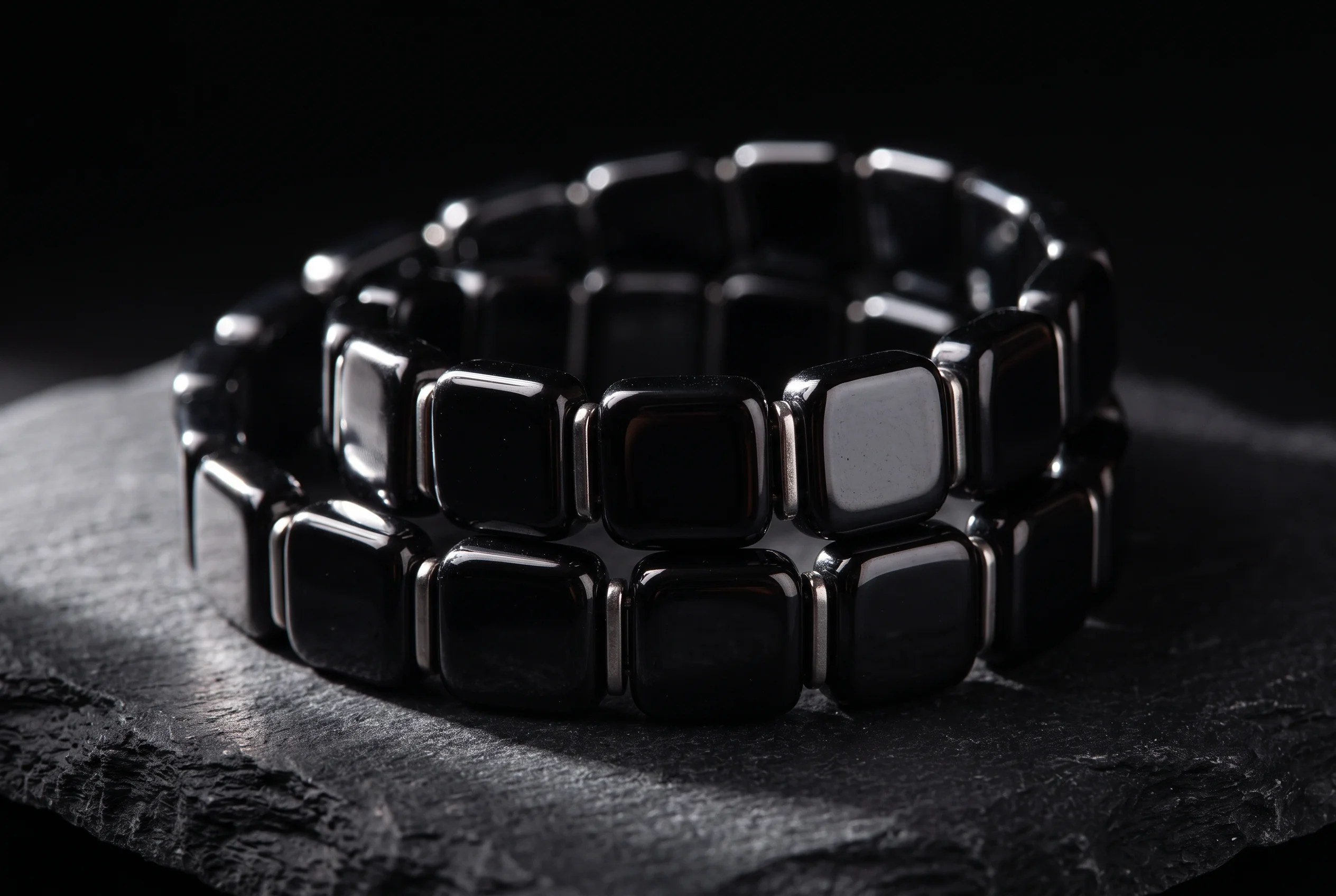
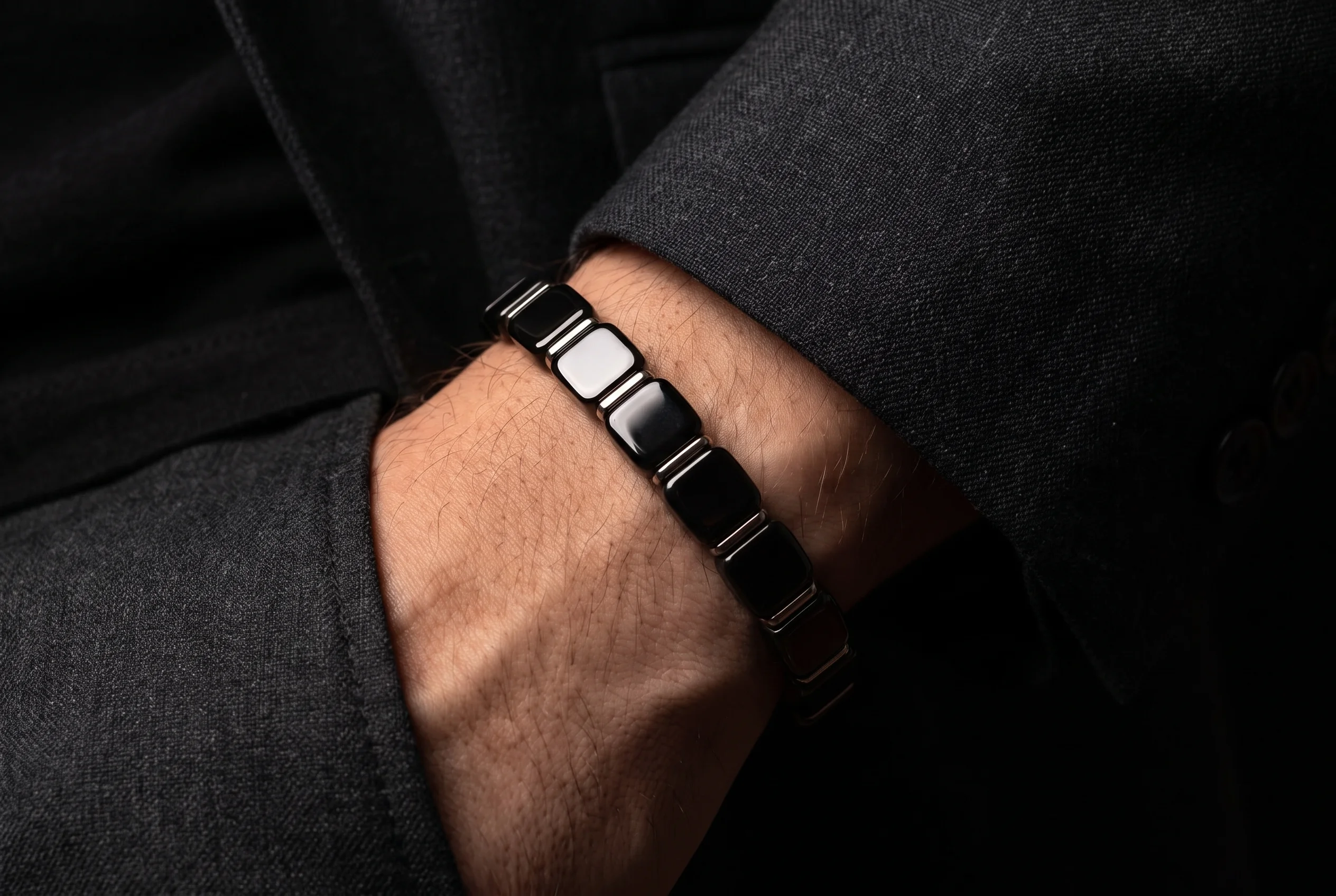
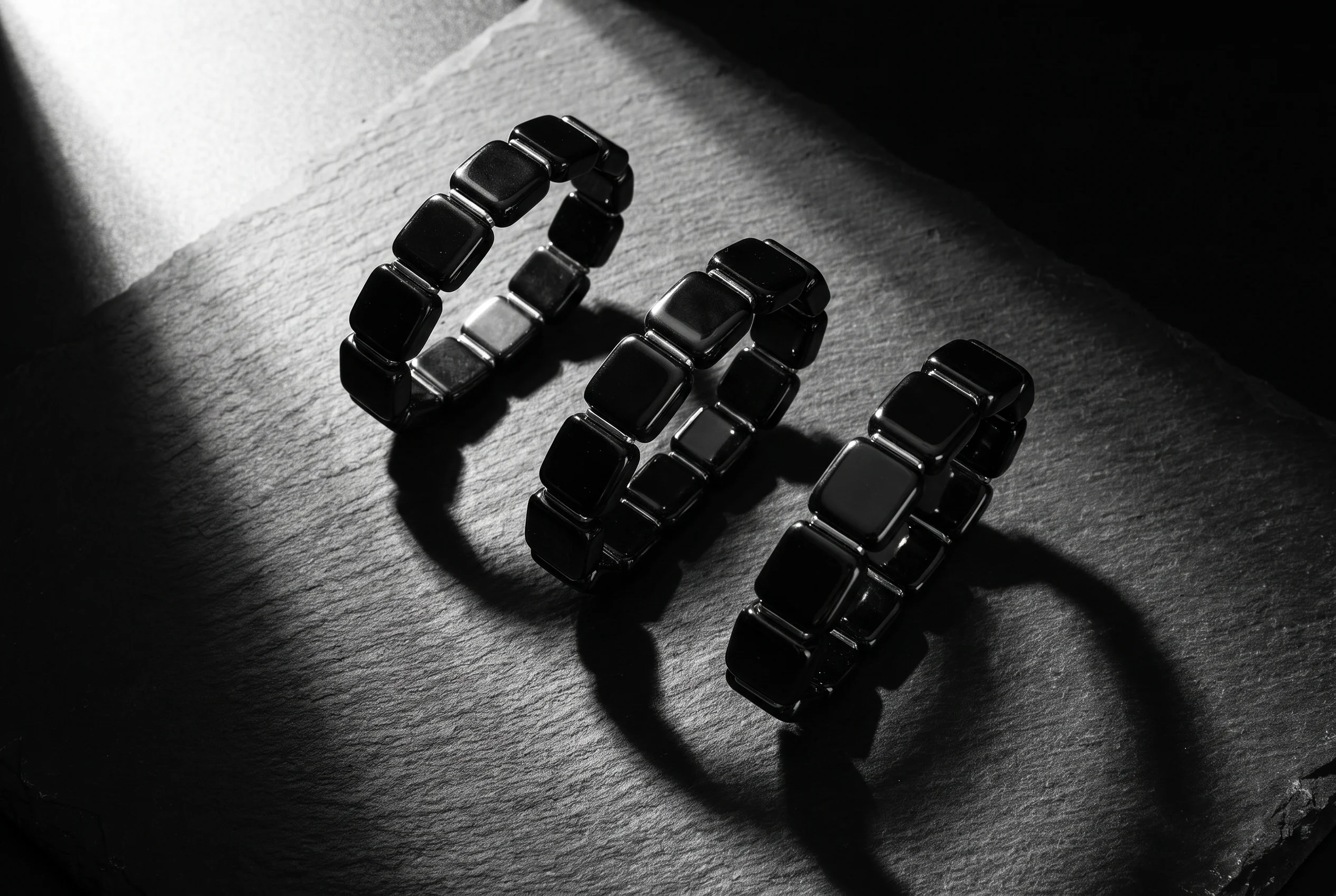
The Hematite Men's Bracelet is cut from genuine natural hematite matching every property above — no coating, no composite, nothing to fake.
Frequently asked questions
- What is the chemical formula of hematite?
- Fe₂O₃ — iron(III) oxide. It's one of the most abundant iron ores on Earth and one of the primary ores used in steelmaking.
- Is hematite magnetic?
- Only weakly, under most conditions — natural hematite is antiferromagnetic, not strongly magnetic. Jewellery marketed as strongly "magnetic hematite" is almost always a man-made composite, not the natural mineral.
- How hard is hematite on the Mohs scale?
- 5.5 to 6.5, roughly level with hardened steel — hard enough for daily-wear jewellery, though a hard direct impact can still chip a polished piece.
Free tracked shipping worldwide · Free fix for damaged, missing, or wrong items
Shop the collection