Hematite Hardness: Is It Hard Enough to Wear Every Day?
Quick answer —Hematite rates 5.5 to 6.5 on the Mohs hardness scale — harder than glass or a knife blade (both 5.5) and close to hardened steel (6.5). That is hard enough to resist daily scratches, but a hard direct impact against tile or metal can still chip its polished surface.
"How hard is hematite" comes up constantly from people about to wear one every day — in the gym, in the shower, at a desk job typing eight hours a day. The number has a real answer, and it is more useful than most jewellery copy makes it sound.
The number: 5.5 to 6.5 on the Mohs scale
Hematite sits at 5.5 to 6.5 on the Mohs hardness scale, the standard mineralogists use to rank how resistant a material is to being scratched by another material. For reference: a fingernail is about 2.5, a knife blade and window glass both sit around 5.5, and hardened steel tops out near 6.5. That puts hematite level with — and at its upper range, harder than — the steel in a typical pocketknife or belt buckle.
The range (rather than one fixed number) exists because hematite is not perfectly uniform: iron oxide content and how tightly the crystal structure formed vary slightly piece to piece, which is normal for a natural mineral and not a sign of lower quality.
What that hardness actually means for daily wear
- Scratch resistance: at 5.5–6.5, hematite will not pick up the fine surface scratches that dull soft stones like turquoise (5–6) or dyed howlite, and it will not scratch from a fingernail, keys, or fabric.
- Steel and hard surfaces: because it is close to steel's own hardness, hematite can hold up against light contact with a belt buckle, a watch case, or a doorframe far better than resin or dyed glass.
- Impact is a different property from hardness: Mohs hardness measures scratch resistance, not toughness against a hard direct blow. A hard drop onto tile, concrete, or metal can still chip a polished hematite bead, the way it would chip most polished stone in the 5–7 range. Hardness and durability against a scratch are not the same thing as shatter-resistance against an impact.
How hardness ties back to what hematite actually is
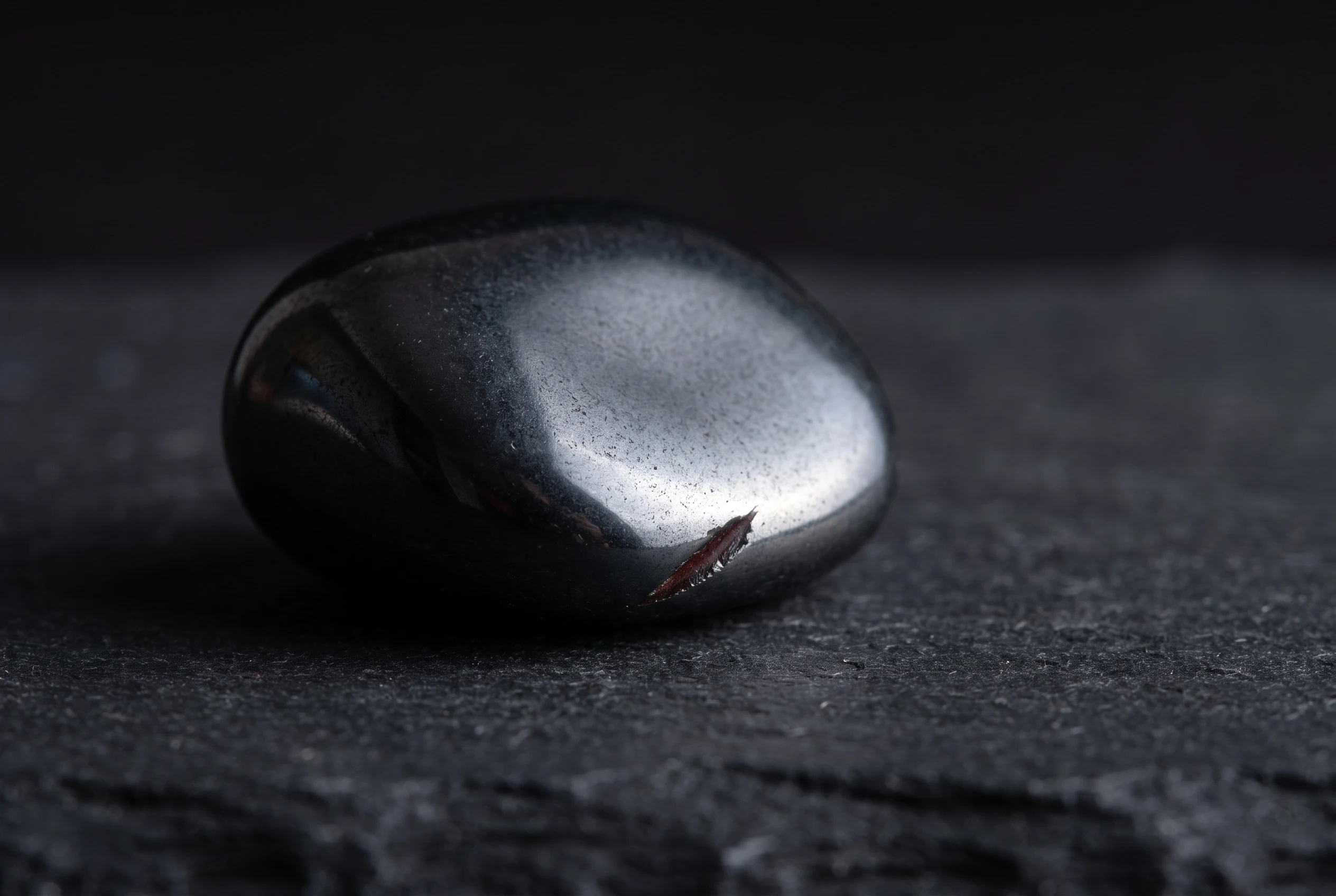
Hematite is iron(III) oxide — Fe₂O₃ — one of the most abundant iron ores on Earth, and its density is the other physical trait people notice alongside its hardness: it is heavier in hand than a stone its size has any right to be. See our full breakdown of what hematite is for the rest of the mineral facts, including the red-brown streak test used to verify a piece is genuine.
The honest bottom line
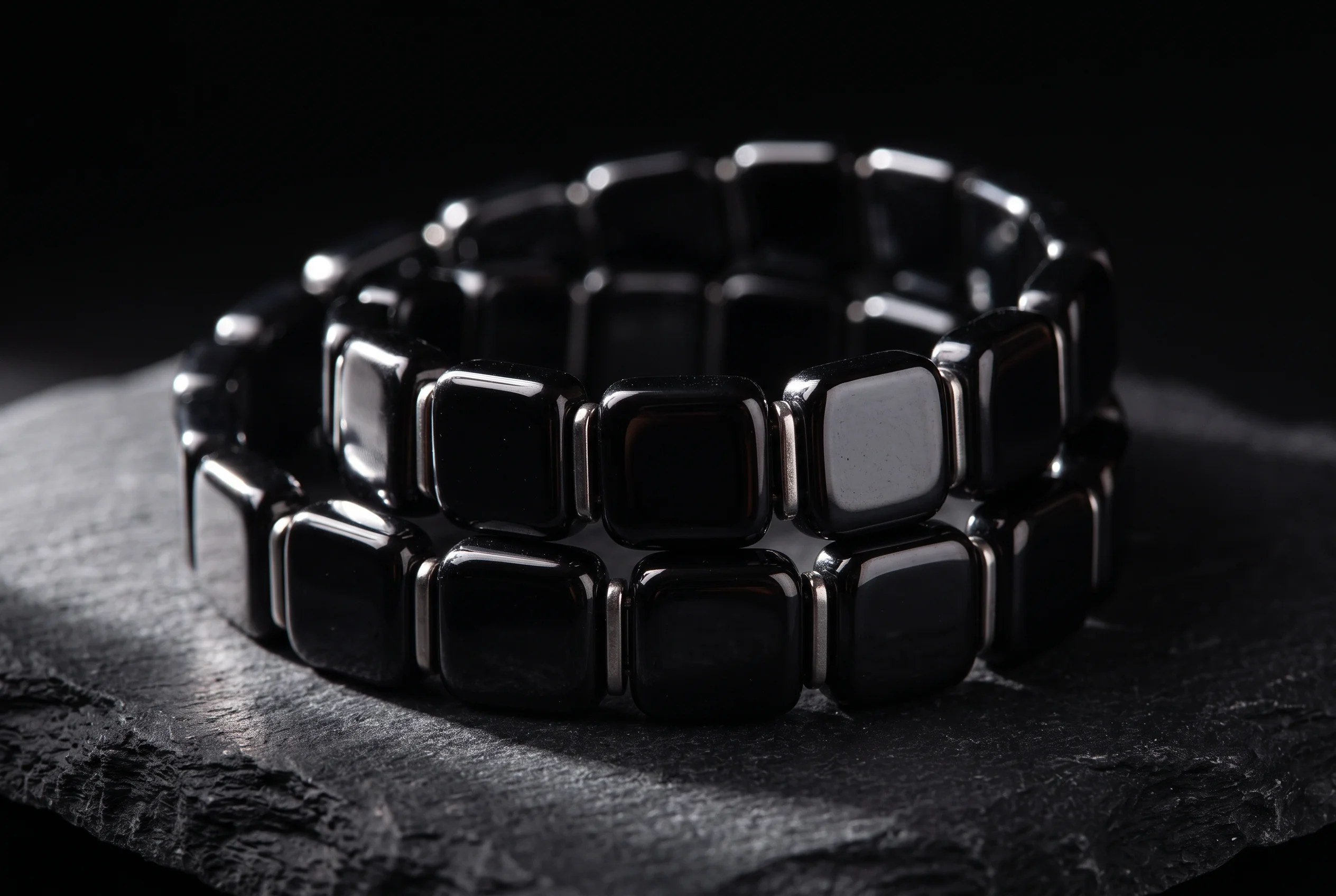
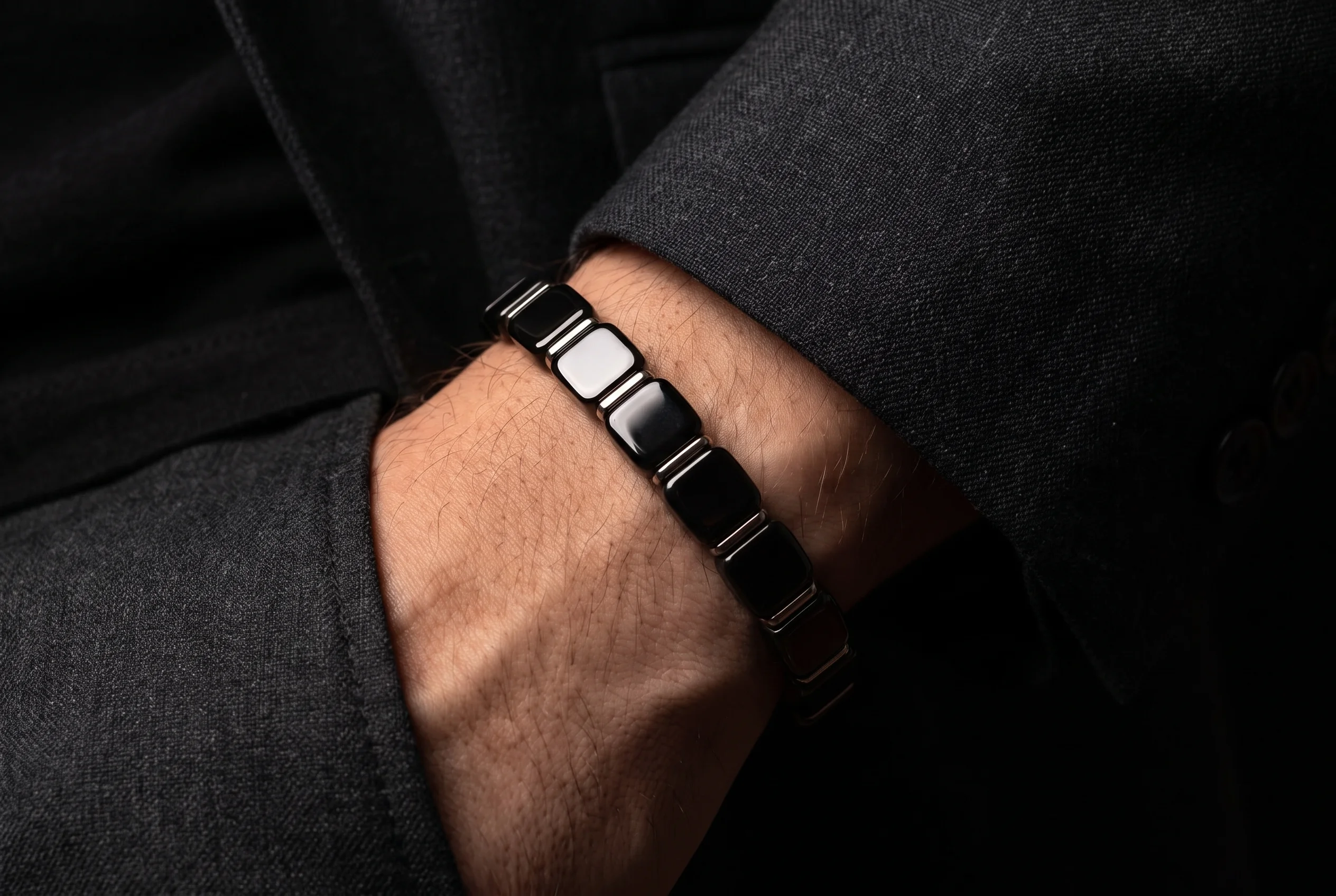
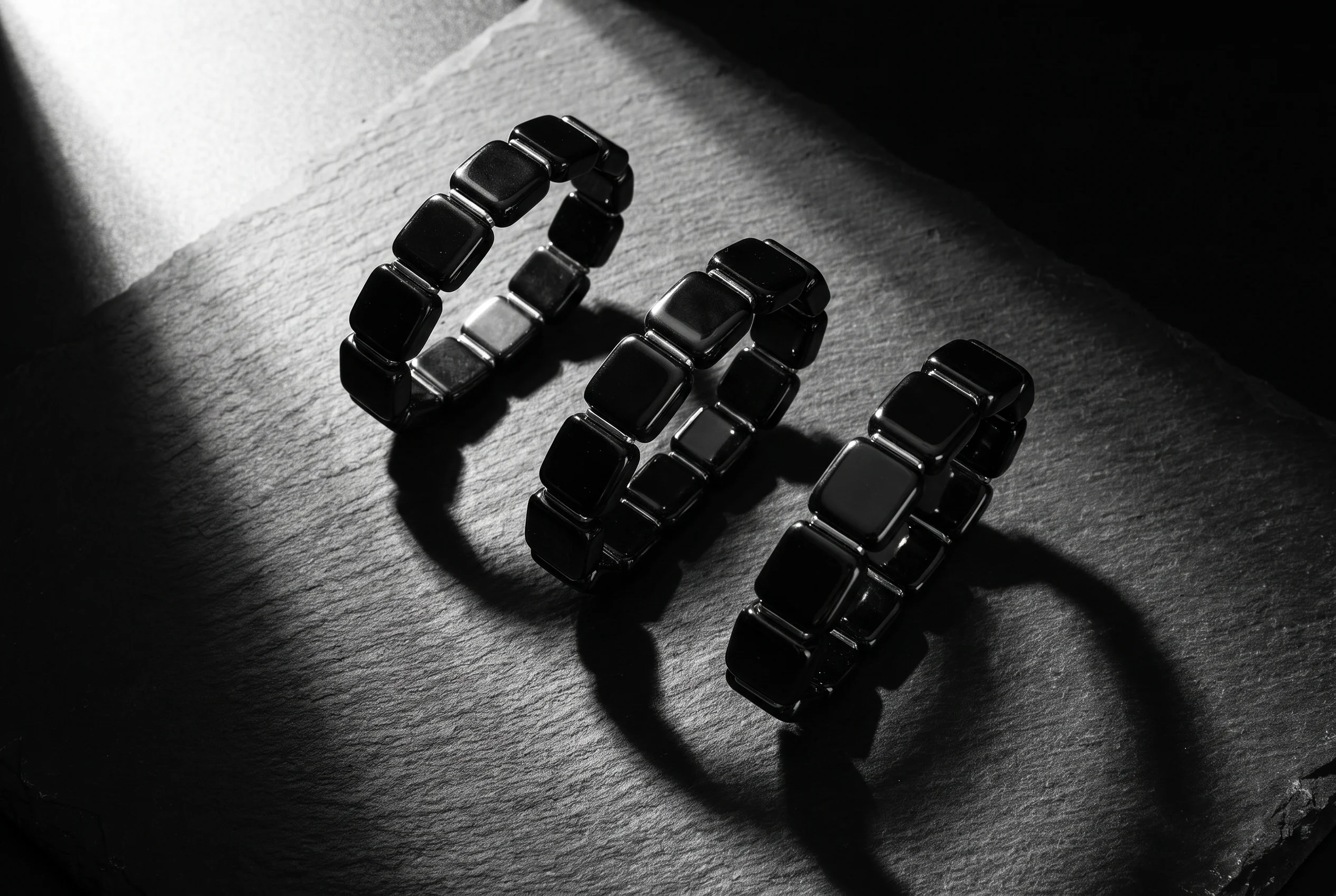
5.5–6.5 on the Mohs scale is hard enough that a hematite bracelet or ring can be worn daily — gym, shower, desk — without the surface dulling the way resin or dyed glass would. It is not indestructible: treat a direct hard impact the way you would treat any polished stone, and it will outlast almost anything else in that price range. The Hematite Men's Bracelet is cut from genuine natural hematite on a stretch elastic core — no coating to wear through, because there is nothing coated to begin with.
Frequently asked questions
- Is hematite a hard stone?
- Yes. Hematite rates 5.5 to 6.5 on the Mohs hardness scale, roughly level with hardened steel and harder than glass or a knife blade (both around 5.5) — hard enough for daily wear.
- Can a hematite bracelet scratch or break?
- It resists everyday scratches well at 5.5–6.5 Mohs, but Mohs hardness measures scratch resistance, not impact resistance. A hard direct drop onto tile, concrete, or metal can still chip a polished hematite bead, the same as most polished stone.
- Is hematite harder than steel?
- It is close to it. Hardened steel sits around 6.5 on the Mohs scale, the top end of hematite's own 5.5–6.5 range — so hematite is roughly on par with, not clearly above, everyday steel.
Free tracked shipping worldwide · Free fix for damaged, missing, or wrong items
Shop the collection