Hematite Crystal: How It Forms, and Why Jewellery Doesn't Look Like a Crystal
Quick answer —Hematite does form true crystals — often flat, metallic, silver-grey plates or clusters — but jewellery-grade hematite is almost always cut and tumbled from massive (non-crystalline) ore, which is why beads look like polished opaque stone rather than a faceted gem.
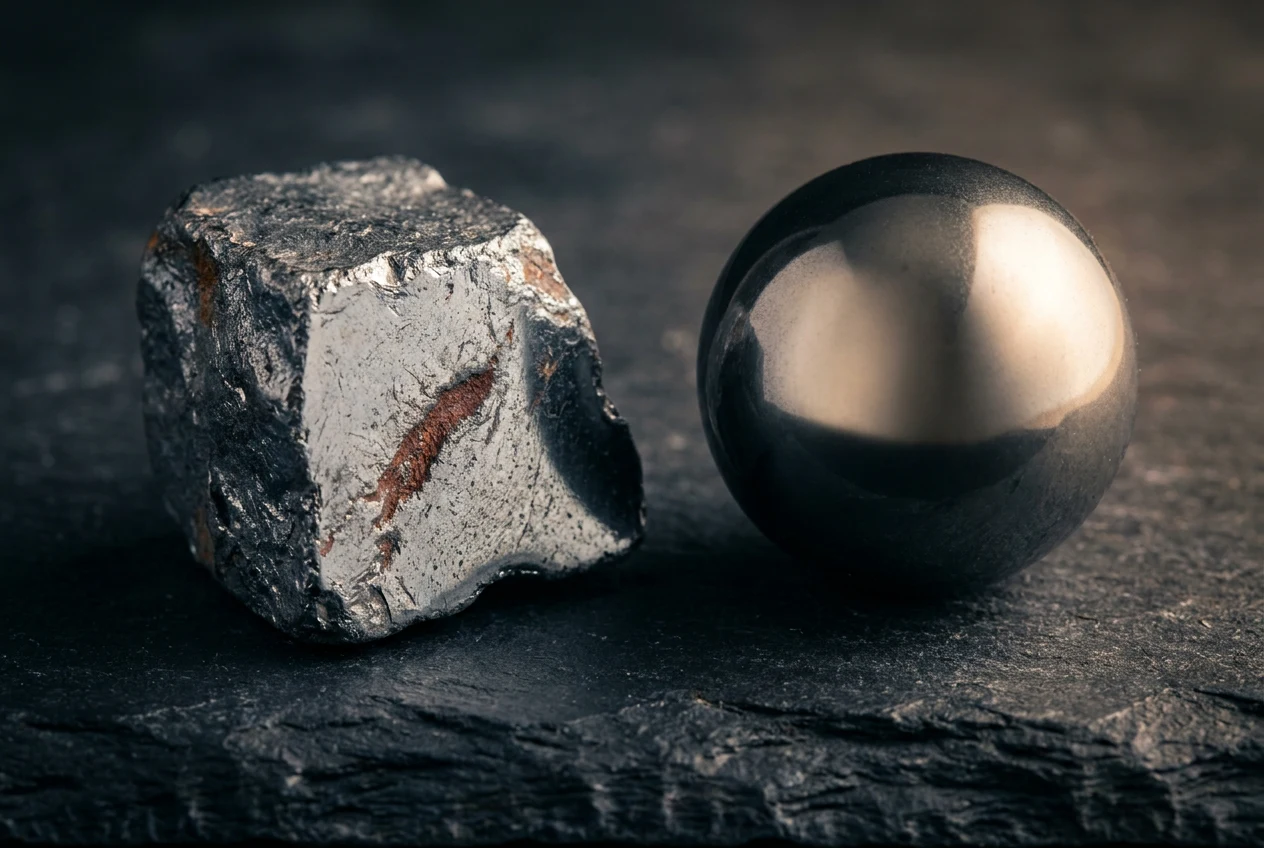
"Hematite crystal" is searched heavily, often by people expecting something closer to quartz or amethyst — a translucent, faceted-looking gem. Hematite jewellery almost never looks like that, and there's a real mineralogical reason why.
Hematite does form crystals — just not the kind most people picture
Under the right geological conditions, hematite does crystallize into a specific form: flat, thin, often metallic silver-grey plates, sometimes called "iron roses" when they cluster into a rosette shape, or tabular crystals with a distinct metallic lustre. These specimens are collected and sold, mostly to mineral collectors rather than jewellers, and they genuinely look like a crystal in the way people expect — angular, lustrous, with visible facets.
Why jewellery-grade hematite looks different
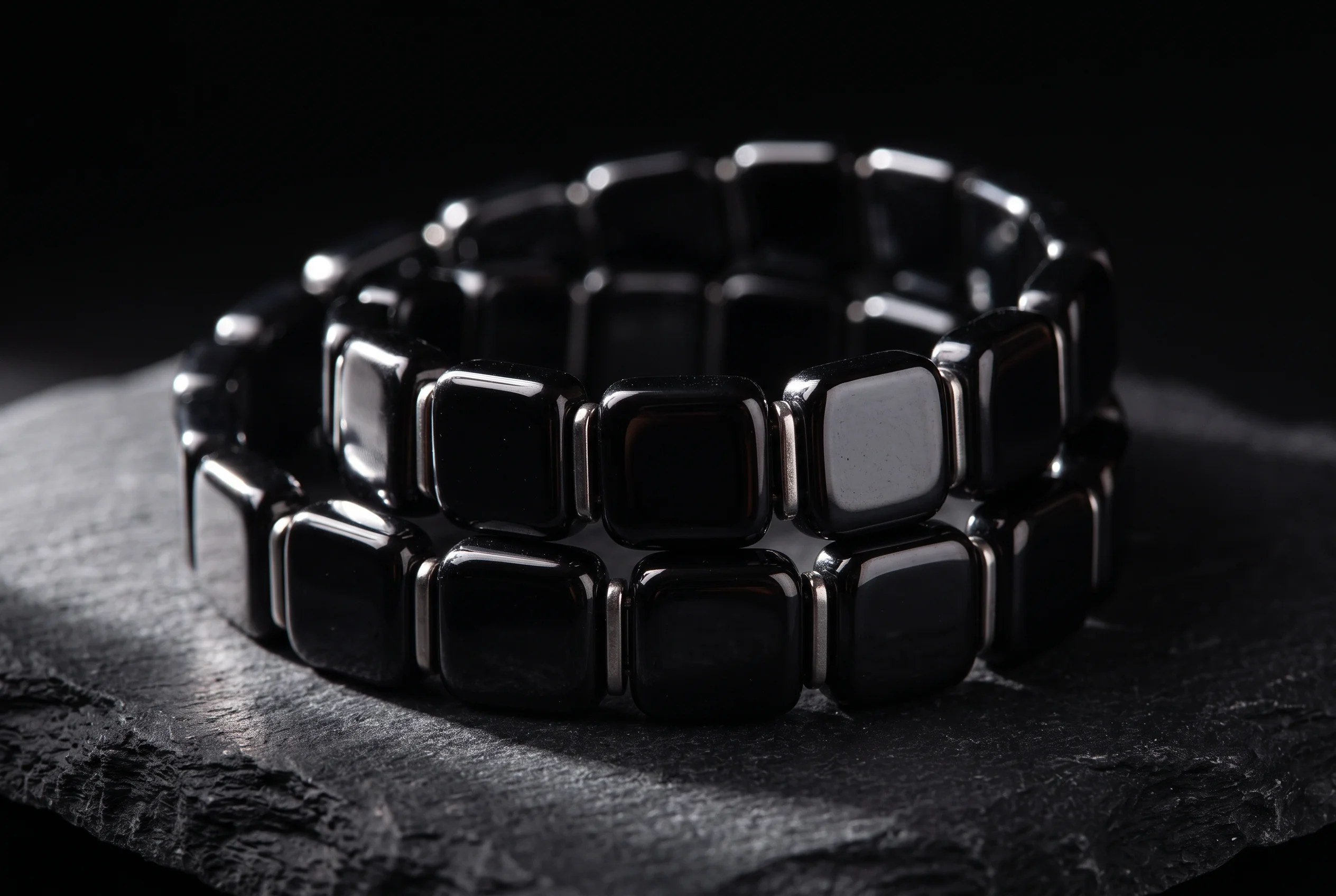
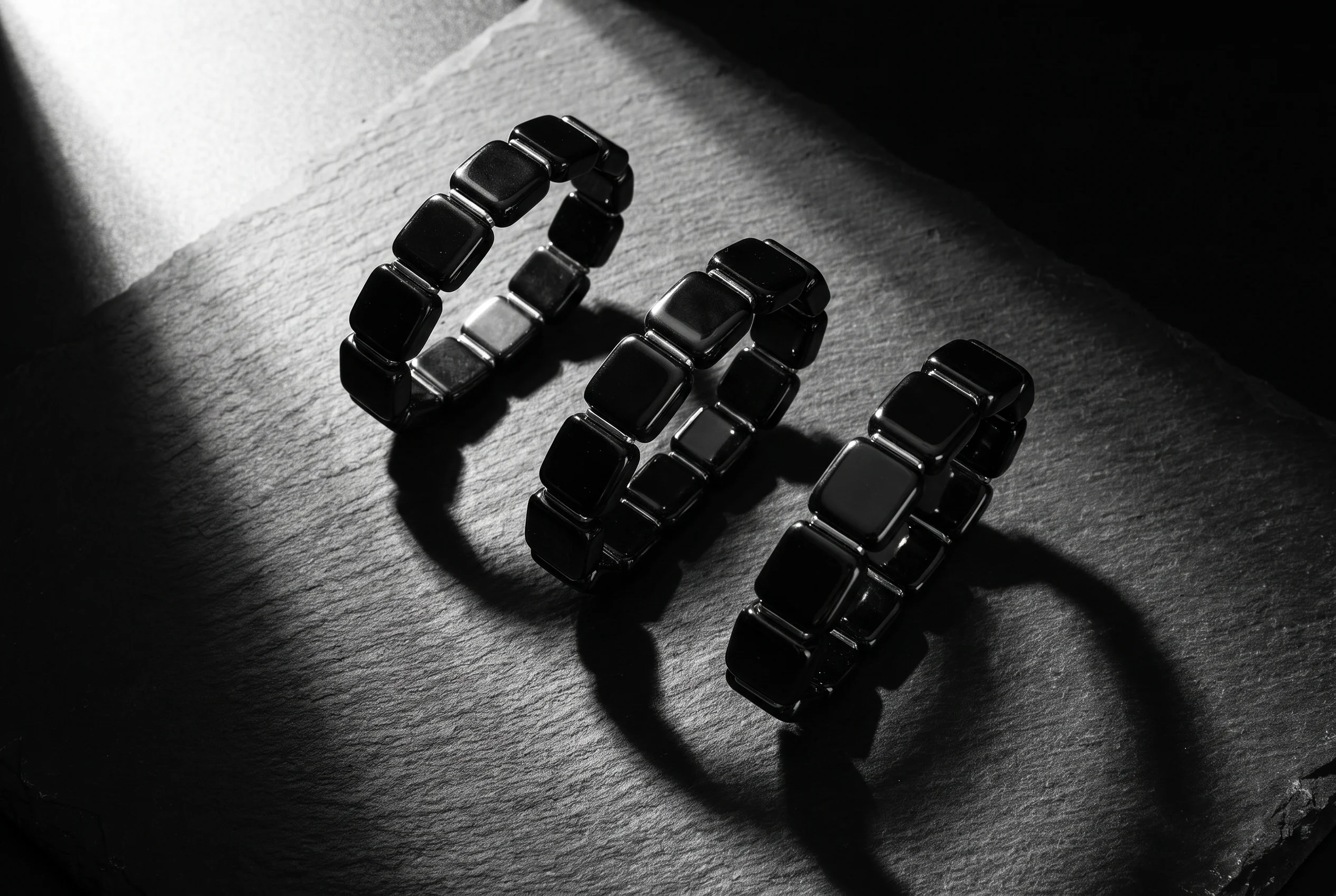
What actually gets cut into beads and cabochons for jewellery is almost always massive hematite — a non-crystalline (or microcrystalline) form of the same mineral, found in large, solid ore deposits rather than as individual crystal specimens. It's this massive form that gets tumbled and polished into the smooth, rounded, opaque black-grey beads used in bracelets and rings. It is chemically identical to crystal-form hematite — same Fe₂O₃, same hardness, same red-brown streak — but structurally it's a dense mass rather than a lattice of visible crystal faces, which is exactly why it takes a polish so well and reads as a solid, opaque stone rather than a faceted gem.
Why this matters when buying
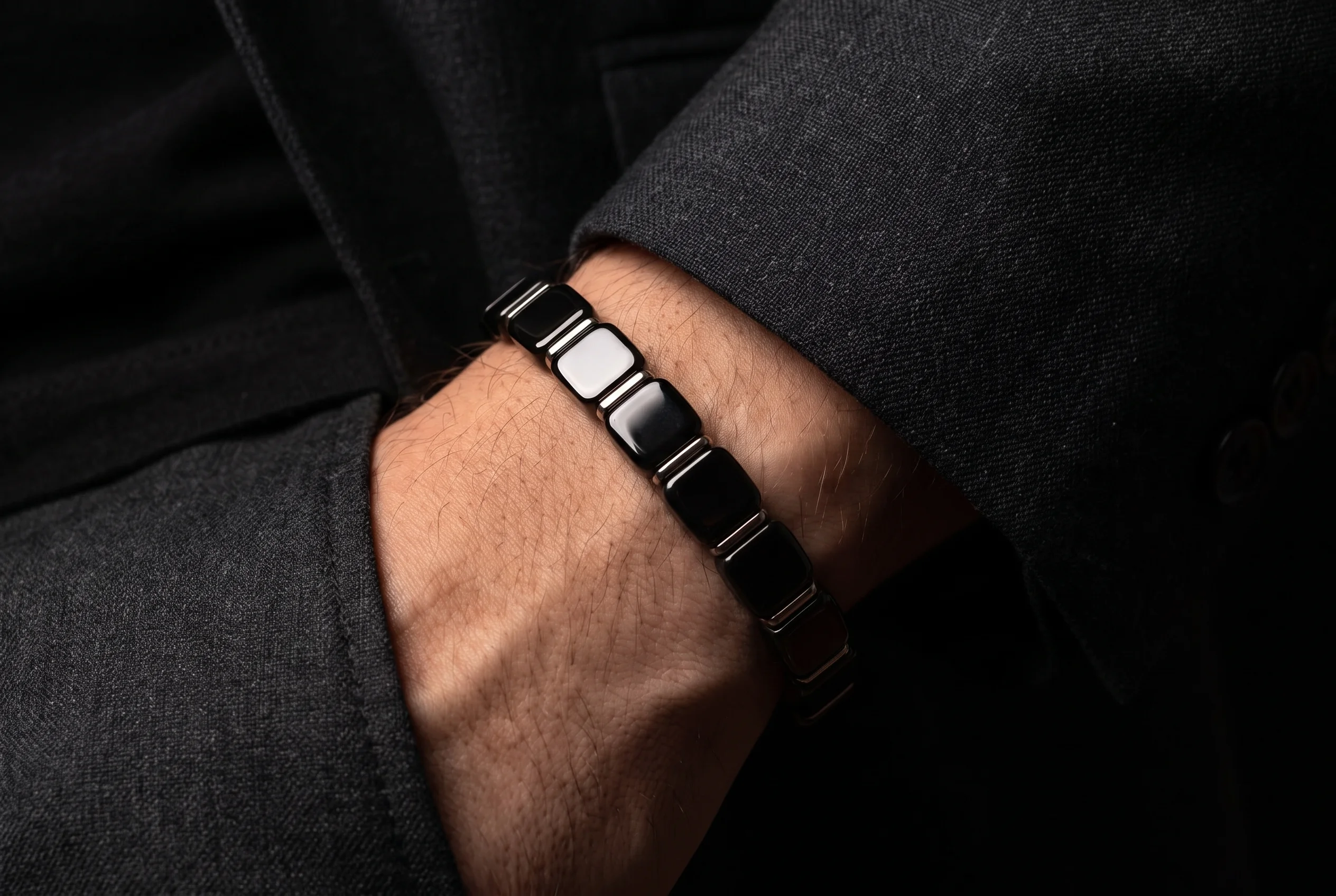
If you're specifically hunting for a crystal-form hematite specimen — the flat metallic plates collectors prize — a polished bead bracelet was never going to satisfy that; you want a raw mineral specimen retailer instead. If you want jewellery you can actually wear daily, massive hematite is not a lesser or fake version of the stone — it's the same mineral in the form that happens to be durable and workable enough to wear on a wrist.
The mineral facts, either form
Whether crystal or massive, hematite is iron(III) oxide — Fe₂O₃ — sitting at 5.5–6.5 on the Mohs hardness scale, dense for its size, and identified by a red-brown streak on unglazed ceramic. See our full breakdown of what hematite is for the complete mineral picture.
If you want the wearable, polished form of the real mineral, the Hematite Men's Bracelet is cut from genuine massive hematite — the same Fe₂O₃ as any hematite crystal specimen, finished for daily wear rather than a display shelf.
Frequently asked questions
- Does hematite jewellery contain real crystals?
- Almost always no, in the strict sense — jewellery-grade hematite is cut from massive (non-crystalline) ore, not individual crystal specimens. It's chemically identical to crystal-form hematite, just structurally a dense mass rather than a lattice of visible crystal faces.
- What does a natural hematite crystal look like?
- True hematite crystals are flat, metallic silver-grey plates, sometimes clustering into a rosette shape called an "iron rose." This form is collected mainly by mineral specimen collectors, not used for polished jewellery beads.
Free tracked shipping worldwide · Free fix for damaged, missing, or wrong items
Shop the collection