Sterling Silver Men's Bracelets: What to Know Before You Buy
Quick answer —Sterling silver is 92.5% pure silver alloyed with other metals for durability — it tarnishes over weeks with air exposure and needs periodic polishing, unlike a natural stone bracelet, which needs neither.
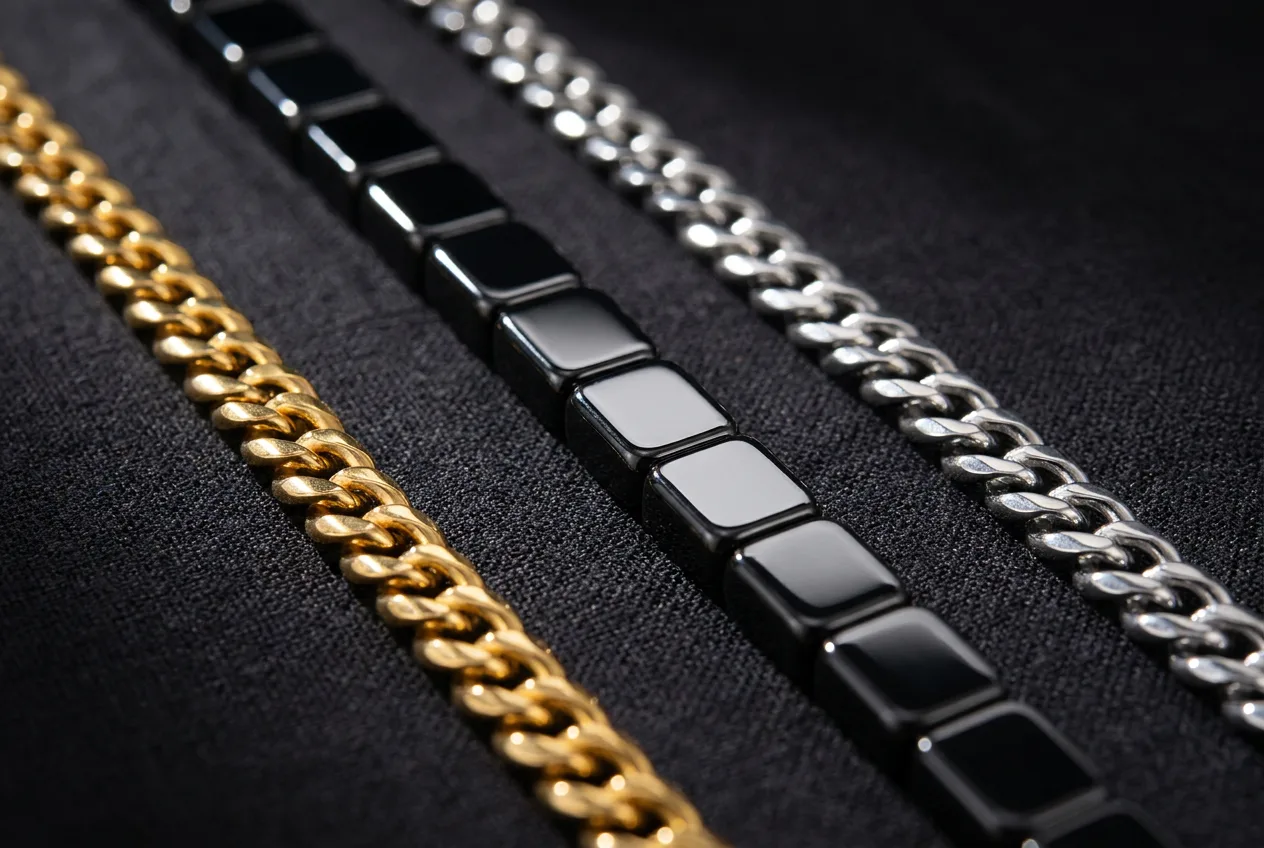
Sterling silver men's bracelets have shown real, consistent search growth this year — likely picking up demand priced out of gold as precious metal prices climbed. Before buying one, it's worth knowing what "sterling" actually means and what owning one day to day involves.
What "sterling silver" actually means
Sterling silver is 92.5% pure silver, alloyed with 7.5% other metal — almost always copper — because pure silver on its own is too soft for jewellery that needs to hold its shape under daily wear. The 92.5 figure is a legal standard in most markets, not a marketing number, and a genuine sterling piece should be stamped "925" somewhere on the clasp or a discreet tag.
Hardness and everyday wear
Sterling silver sits around 2.5–3 on the Mohs hardness scale — soft enough to pick up fine surface scratches from keys, desks, and gym equipment within weeks of regular wear. That's not a defect; it's inherent to the metal, and it's part of why sterling jewellery develops a "patina" of fine surface texture over time rather than staying mirror-polished.
The upkeep that comes with it
Sterling silver tarnishes — a chemical reaction between the copper in the alloy and sulfur compounds in air, which darkens the surface over weeks even without contact with skin or water. Left untreated, this progresses from a light yellow tint to visible black-grey areas, especially in the recesses of a chain link. Regular wear actually slows tarnishing somewhat (skin oils provide some protection), but a proper polish every few months with a silver cloth is the realistic maintenance schedule for a piece that's going to stay looking new.
How it compares to a natural stone bracelet
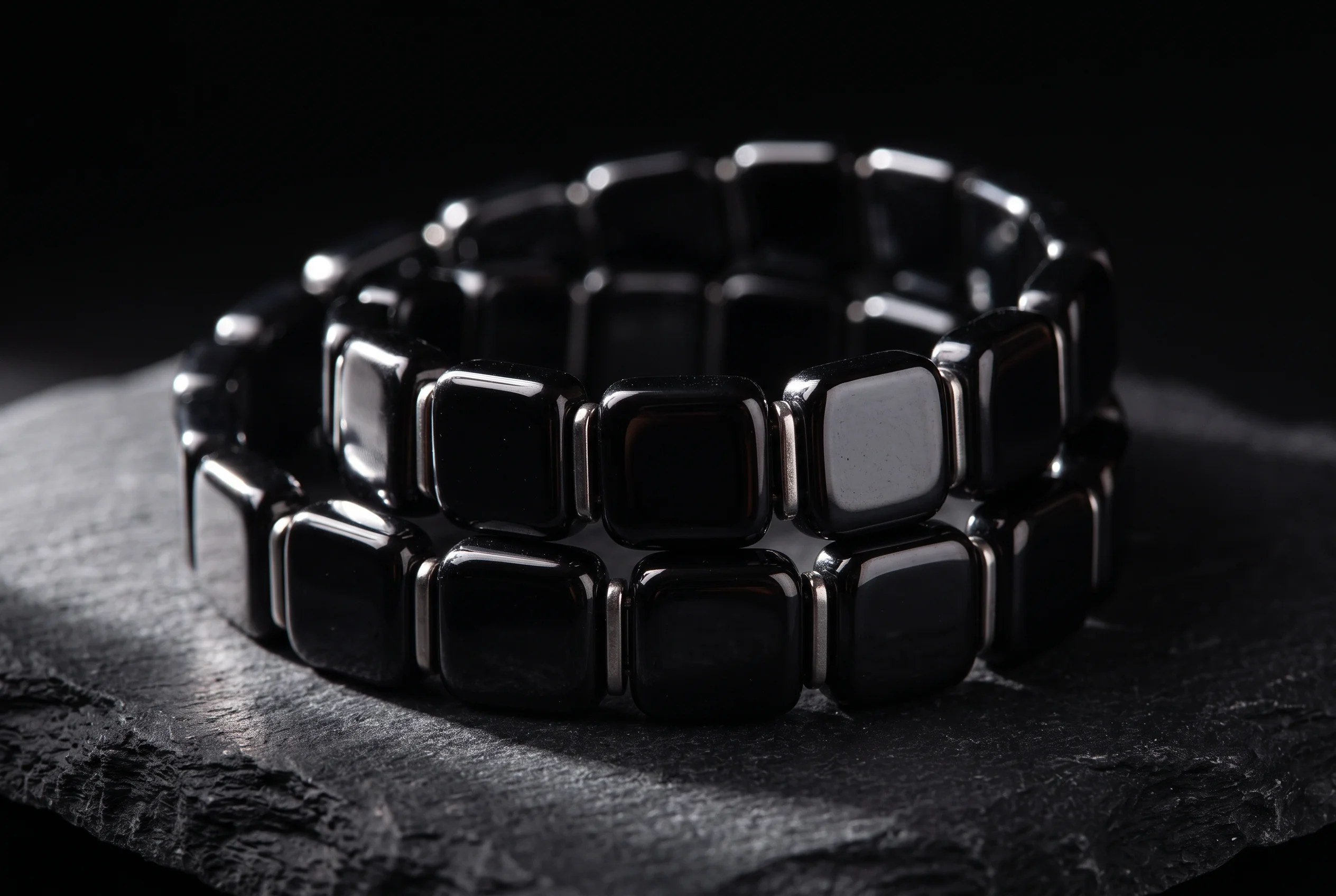
A hematite bead bracelet sits at 5.5–6.5 on the Mohs scale — meaningfully harder than sterling silver's 2.5–3 — and has no tarnishing process at all, because it's not a reactive metal. That's not an argument that stone is "better" than silver; they're solving for different things. Silver gives you a classic, dressed-up metallic look that stone can't replicate. Stone gives you lower upkeep and better scratch resistance than silver can offer. See our full hematite vs. gold and silver comparison for the complete breakdown.
The honest recommendation
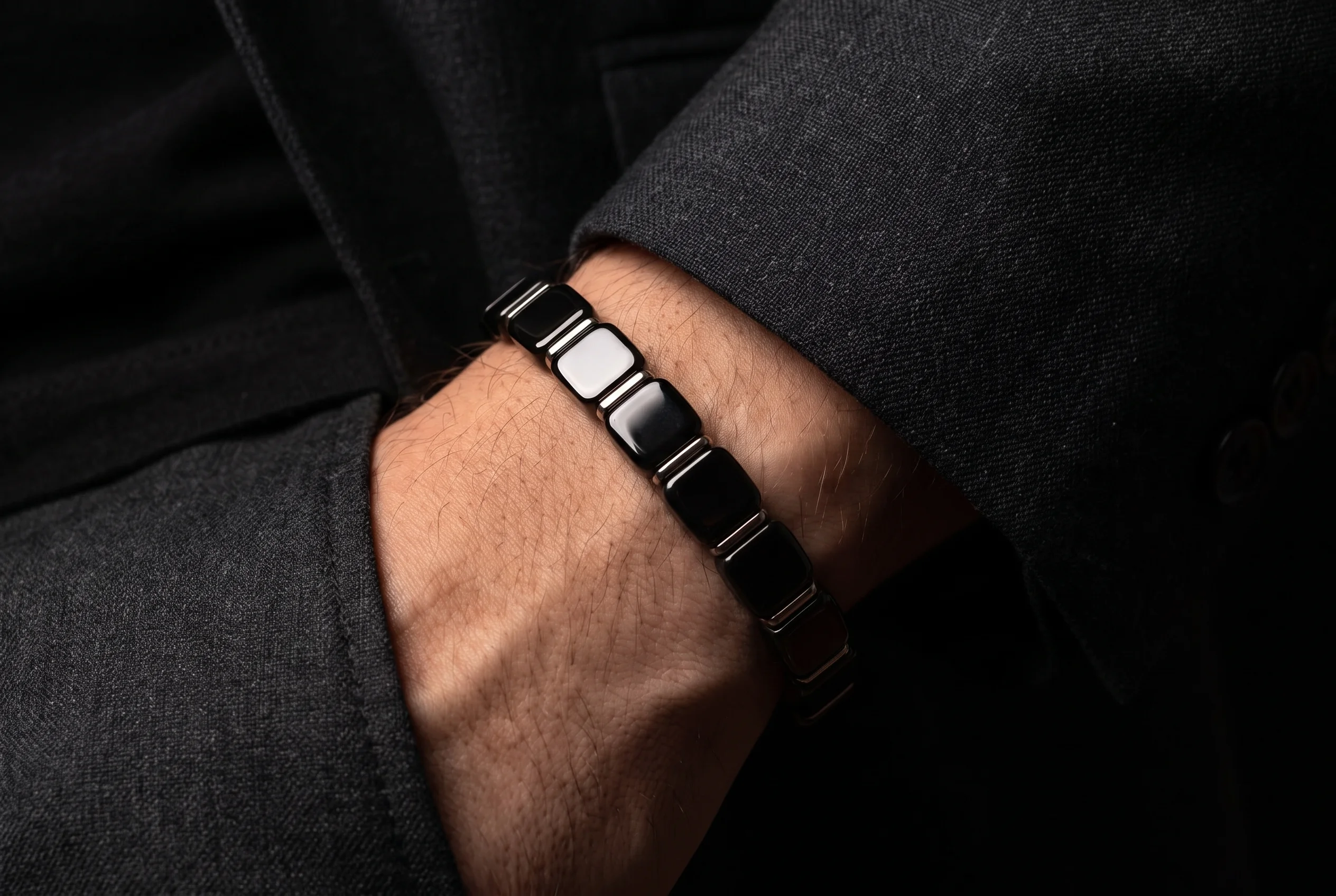
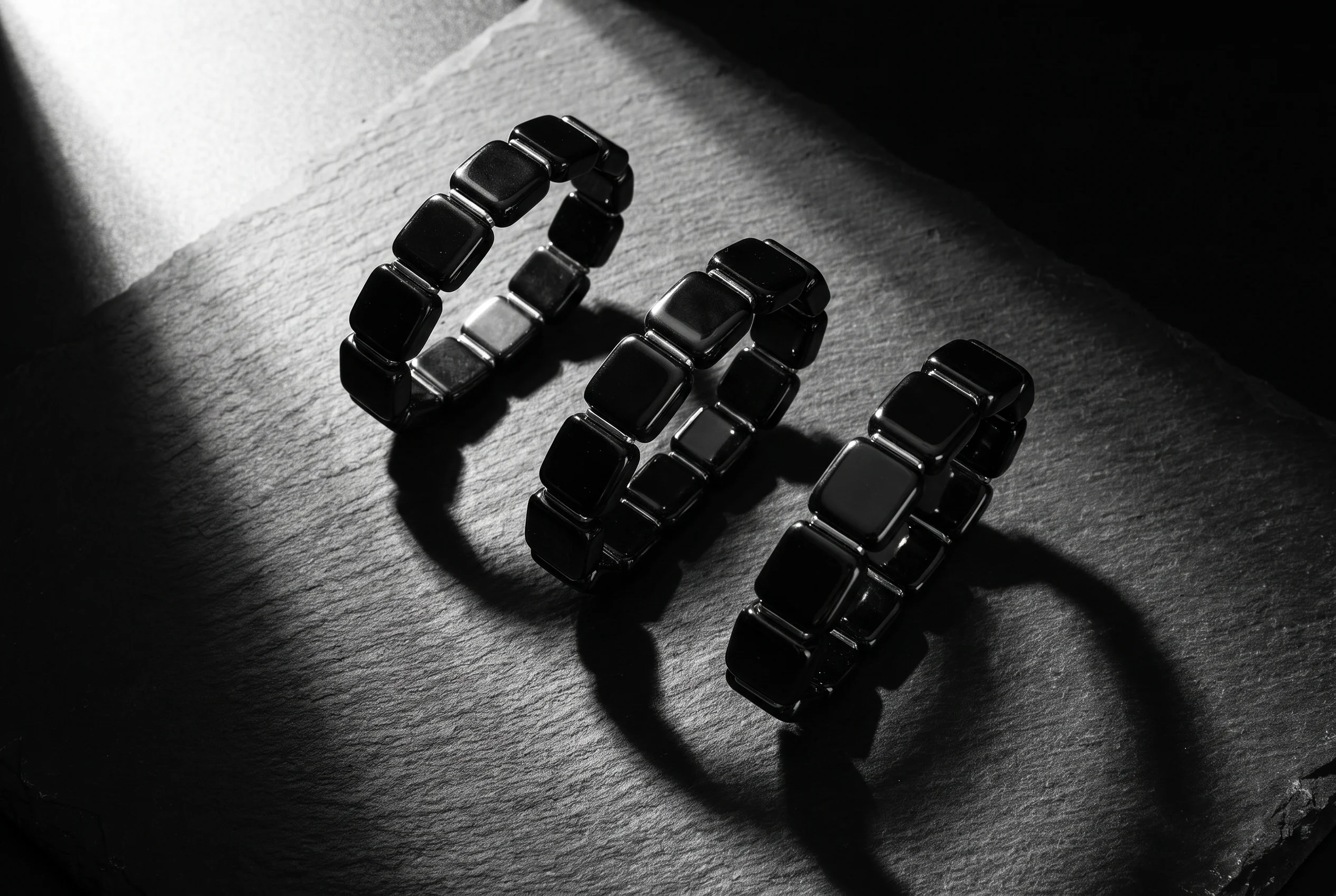
If the polished, reflective metal look is what you want, sterling silver at 92.5% purity is a legitimate, accessible alternative to gold — just budget for periodic polishing as part of owning it. If low-maintenance daily durability matters more than a metallic finish, the Hematite Men's Bracelet is natural hematite on a stretch elastic core — nothing to tarnish, nothing to polish.
Frequently asked questions
- Does sterling silver tarnish?
- Yes. Sterling silver's copper alloy content reacts with sulfur compounds in air over weeks, darkening the surface. Regular polishing with a silver cloth every few months keeps it looking new.
- What does 925 mean on a silver bracelet?
- 925 is the sterling silver purity stamp, meaning the piece is 92.5% pure silver alloyed with 7.5% other metal (usually copper) for durability. It's a legal standard, not a marketing term.
Free tracked shipping worldwide · Free fix for damaged, missing, or wrong items
Shop the collection