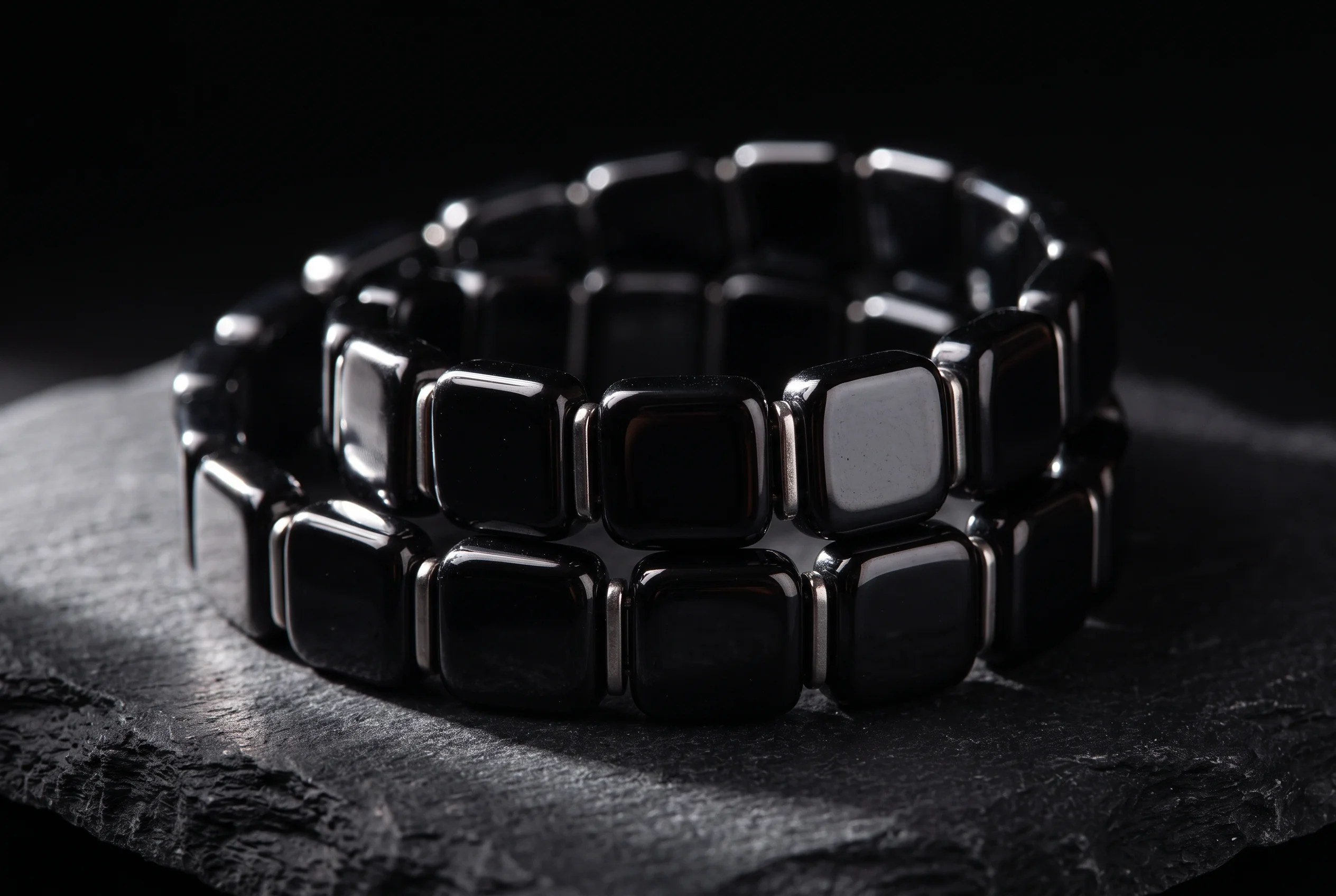
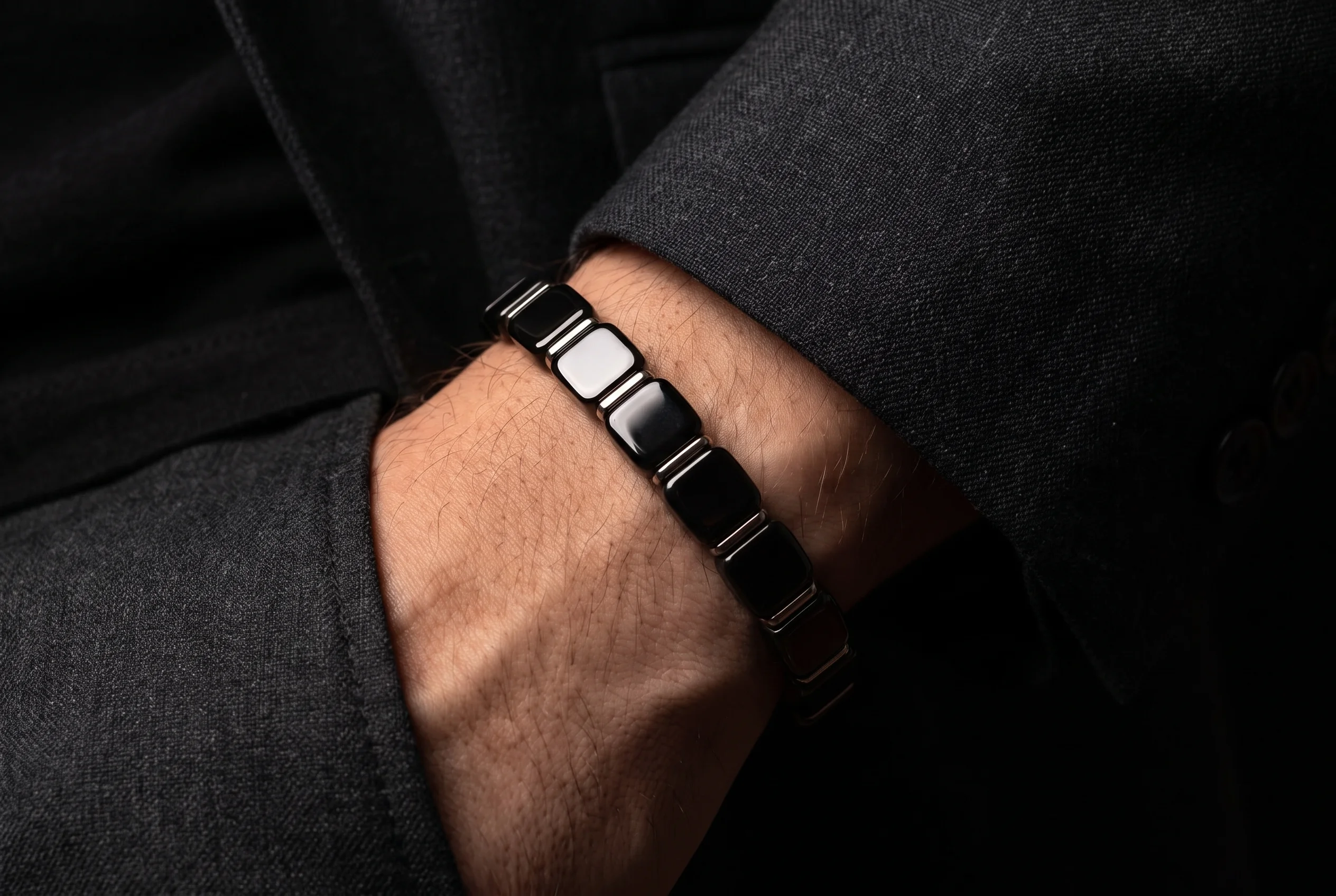
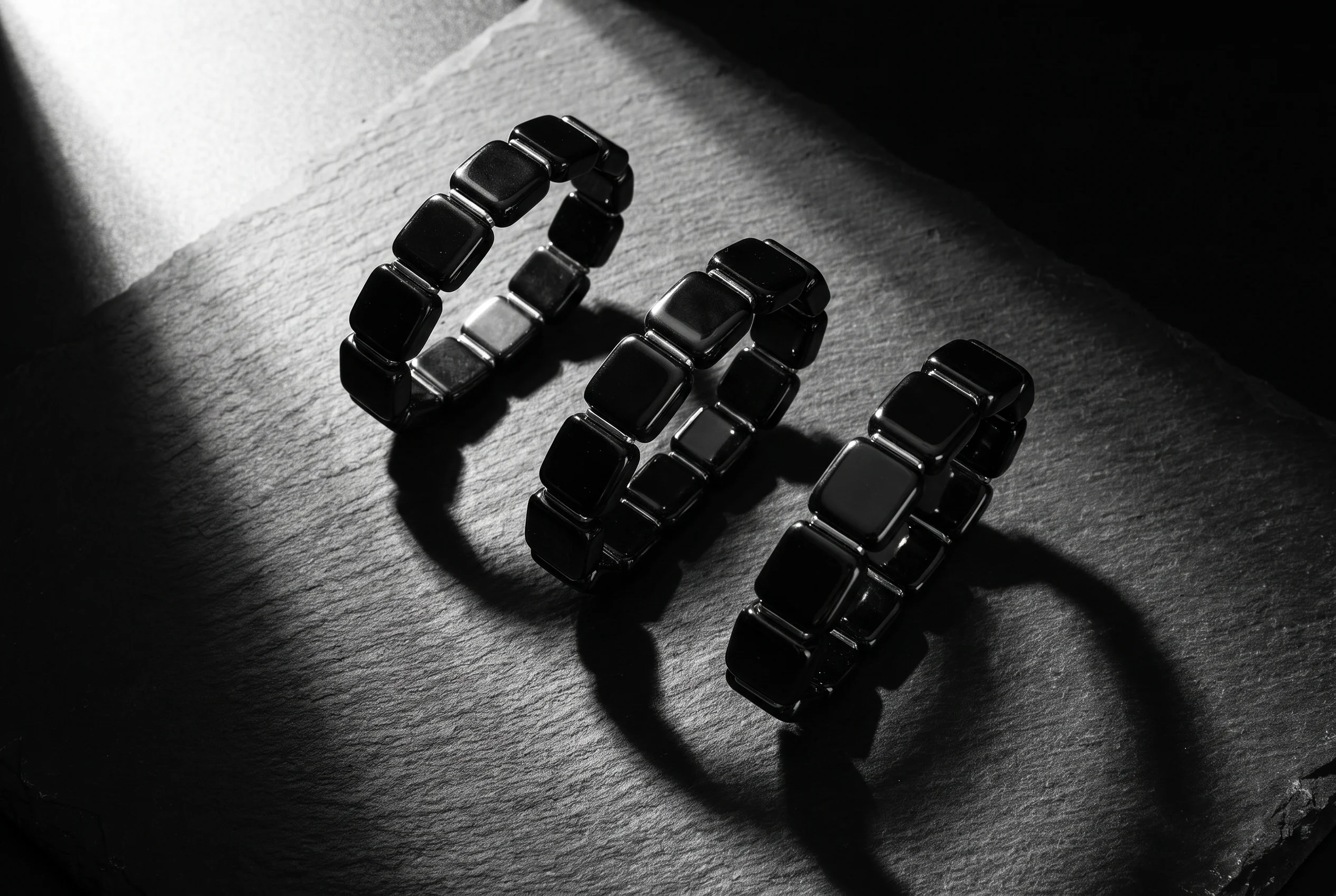
Magnetic Hematite Ring: What It Actually Is (And Isn't)
Quick answer —A ring marketed as "magnetic hematite" is almost always a man-made magnetic composite (often called hematine), not natural hematite, which is only weakly magnetic on its own.
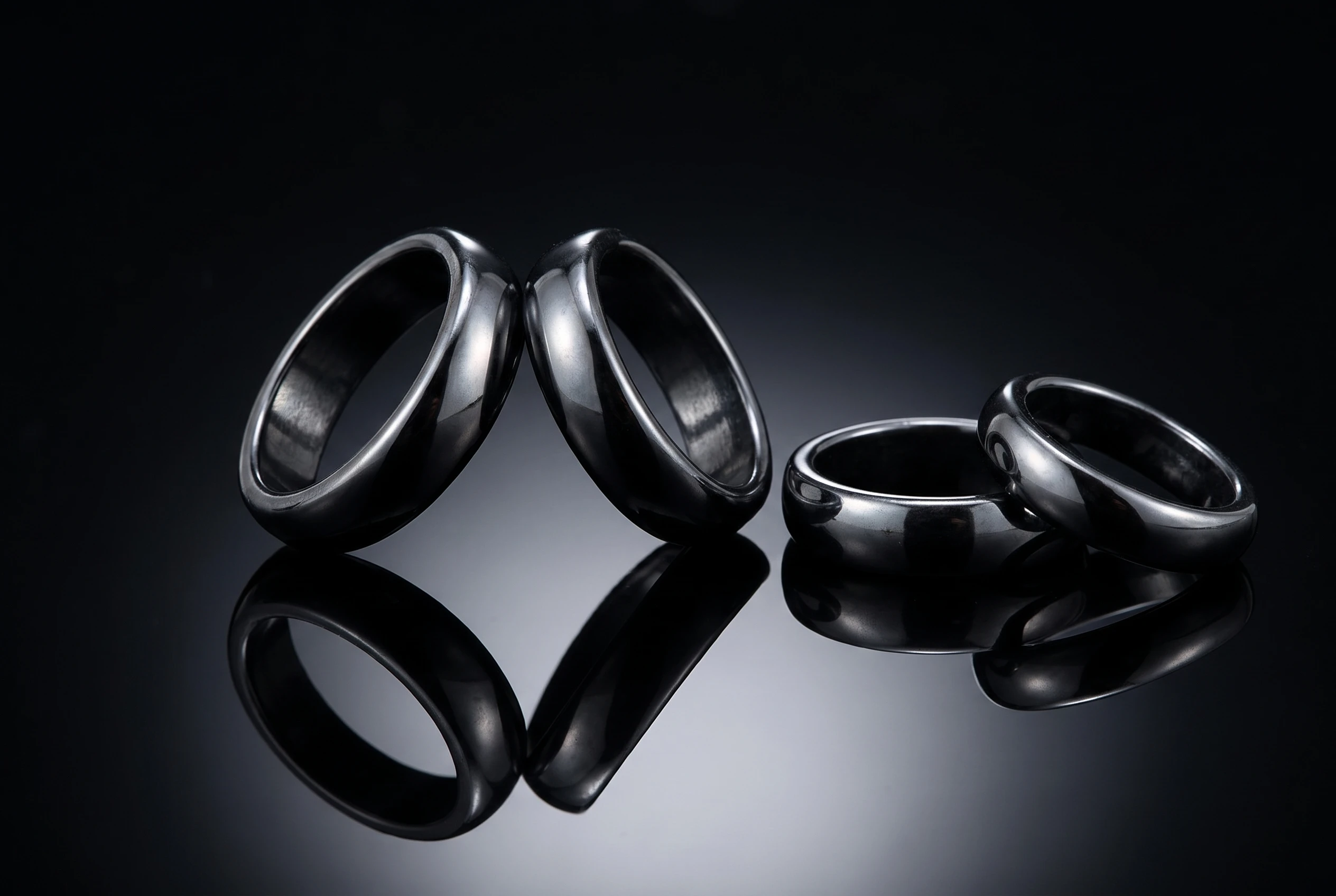
"Magnetic hematite ring" is one of the fastest-rising hematite searches this year, and it is also one of the most misleadingly named products in the category. Here is what is actually on your finger when a hematite ring snaps to a fridge door.
Natural hematite is only weakly magnetic
Hematite is iron(III) oxide, Fe₂O₃. It is chemically close to magnetite (Fe₃O₄), the strongly magnetic iron oxide, but the difference in oxidation state matters a great deal: magnetite is ferrimagnetic and pulls hard toward a magnet, while pure natural hematite is antiferromagnetic under most conditions — only weakly magnetic, with no real pull you would notice in daily wear. A genuine natural hematite ring will not snap to another ring or grab a fridge magnet.
So what is a "magnetic hematite ring" actually made of?
What is sold under that name is almost always a man-made composite — sintered iron oxide powder built around a strong magnetic core, engineered specifically to pull the way natural hematite does not. It is often called hematine or "hemalyke" elsewhere in the market. It is a real, deliberately manufactured material, not a scam — the issue is purely one of naming: calling it "hematite" implies the natural mineral when it is a different, man-made product.
Why this distinction matters more for a ring than a bracelet
A magnetic composite ring is generally more brittle under sudden impact than a solid natural hematite band, and a ring takes far more knocks in daily wear than a bracelet ever does — against doorframes, gripped tight at the gym, squeezed under a glove. That is one real, practical reason magnetic hematite rings crack more often than natural ones, on top of whatever meaning gets read into a ring breaking. Our guide to why hematite rings crack covers that mechanism in full.
What we will not claim
Some sellers attach "magnetic therapy" language to these rings — claims about circulation, pain relief, or energy balance. We will not make those claims, and you should be sceptical of them anywhere you see them: there is no accepted clinical evidence that a bracelet- or ring-strength magnet affects circulation or pain. If you want a magnetic hematite ring for the satisfying pull of the beads or the look of it, that is a fine reason. It does not need a medical claim attached.
How to tell which one you are buying
- Test the pull. Hold it near a fridge magnet or another ring. A strong, obvious snap means an engineered magnetic composite, not natural hematite.
- Read the listing carefully. "Natural" or "genuine hematite" should mean the mineral. "Magnetic hematite" or "hematine" means the composite — a real product, just a different one.
- Ask before you buy. A seller who will not clearly say which one you are getting is leaving out a fact that changes both the ring's durability and what it actually is.
Our own Curved Hematite Ring is sold in both a natural non-magnetic finish and a magnetic hematine finish, labelled plainly as which is which — and if you want the solid natural stone with no engineered core, the Hematite Band Ring is that piece.
Frequently asked questions
- Is a magnetic hematite ring real hematite?
- Usually not entirely. Natural hematite is only weakly magnetic. A ring that pulls strongly to a magnet is almost always a man-made composite (often called hematine) built with a magnetic core, not solid natural hematite.
- Are magnetic hematite rings safe to wear?
- The composite material itself is safe to wear as jewellery. What is not supported is any claim that the magnet provides a therapeutic or medical effect — there is no accepted clinical evidence for magnetic therapy at bracelet or ring strength.
- Why do magnetic hematite rings crack more than natural ones?
- The engineered magnetic composite is generally more brittle under sudden impact than solid natural hematite, and rings take frequent knocks in daily wear — a combination that makes magnetic hematite rings crack more often than natural, non-magnetic ones.
Free tracked shipping worldwide · Free fix for damaged, missing, or wrong items
Shop the collection