Hematite Necklace: What to Know Before You Buy One
Quick answer —A hematite necklace is the same iron oxide mineral as a hematite bracelet, strung on a longer cord or chain. Weight matters more here than on a bracelet — a heavy strand of large beads will sit differently on the neck than a bracelet does on the wrist.
"Hematite necklace" gets searched nearly as often as "hematite bracelet," but almost everything written about the stone defaults to the wrist. A necklace is a genuinely different object to wear, not just a longer version of the same bracelet — here is what actually changes.
Same mineral, different physics
A hematite necklace is cut from the same iron(III) oxide — Fe₂O₃ — as a hematite bracelet: dense, 5.5–6.5 on the Mohs scale, metallic black-grey with a red-brown streak underneath. What changes is how that density behaves once it's hanging from the neck instead of wrapped around a wrist. A bracelet's weight is distributed and supported by the wrist itself; a necklace's weight pulls straight down on the back of the neck, which is why bead size and strand length matter more here than they do for a bracelet of the same stone.
What to check before buying one
- Bead size. Large beads (10–12mm) that feel substantial on a wrist can feel genuinely heavy strung as a full necklace. If you haven't worn a heavier necklace before, 4–6mm beads are the safer starting point.
- Strand length. A shorter, close-fitting strand sits differently against a collar than a longer one worn under a shirt — think about where you'll actually wear it (visible over a t-shirt, hidden under a button-down) before choosing length.
- Clasp vs. knotted cord. A necklace sees more daily on/off cycles at the neck than a stretch-cord bracelet does at the wrist, so a secure clasp matters more here than it does on a bracelet.
What we will not claim
Hematite has been worn since antiquity — as amulets, in burial contexts, as a grounding stone across multiple traditions — and a necklace, sitting closest to the chest and throat, is often read in those traditions as a more "direct" way to wear the stone. That is tradition, not a documented physical effect, and we will always say so plainly rather than let the framing imply otherwise. See our Claims Policy for exactly where we draw that line on every product.
The honest bottom line
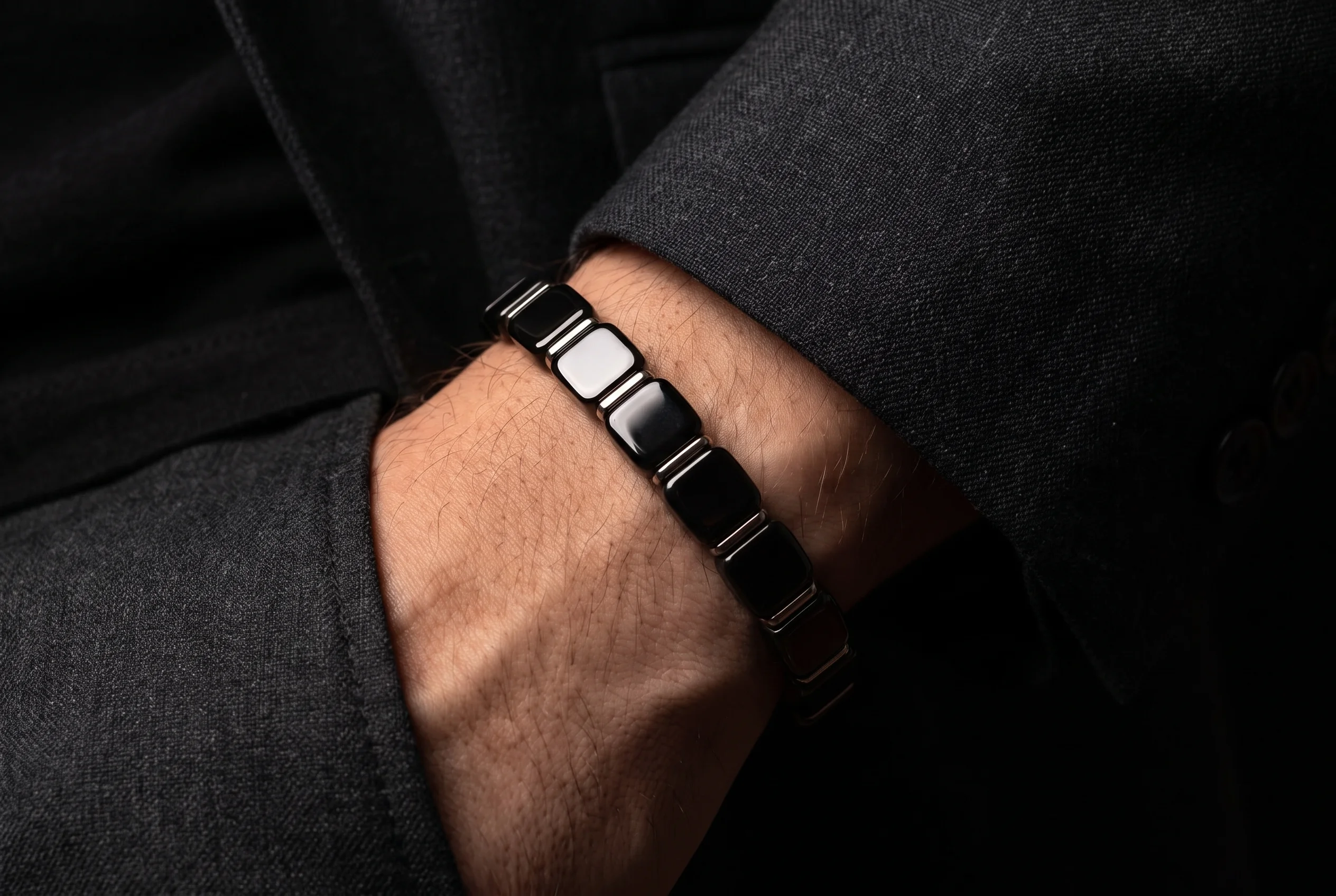
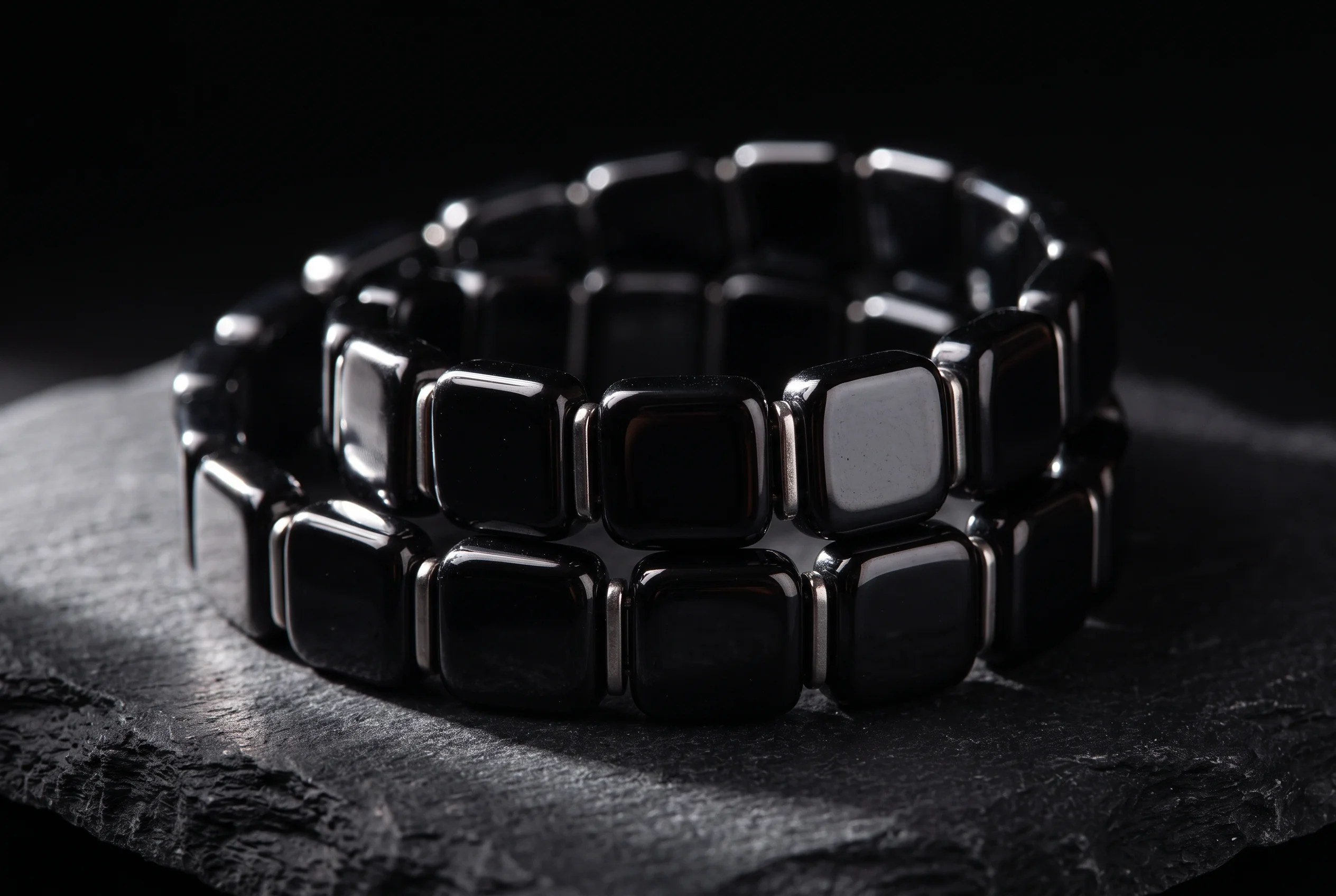
A hematite necklace gives you the same real, dense iron ore as a hematite bracelet, just distributed differently — heavier-feeling, more visible, and worth sizing the bead and strand length to how you'll actually wear it. We currently focus on bracelets and rings rather than necklaces, so if you want to start with the stone itself, the Hematite Men's Bracelet is natural, polished hematite on a stretch elastic core.
Frequently asked questions
- Is a hematite necklace heavier than a hematite bracelet?
- It can feel that way even at the same bead size, because a necklace's weight pulls straight down on the neck rather than being distributed and supported by the wrist the way a bracelet's weight is. Larger beads (10–12mm) that feel fine on a wrist can feel noticeably heavier strung as a full necklace.
- What length should a men's hematite necklace be?
- 16–20 inches sits close to the collarbone and works under most shirt collars. Longer strands read as a statement pendant piece rather than an everyday layer — a different look, not a mistake, but worth choosing deliberately.
Free tracked shipping worldwide · Free fix for damaged, missing, or wrong items
Shop the collection