Black Hematite: Why the Color Isn't What You Think
Quick answer —Hematite's natural color is a metallic silver-black to grey-black, which is why it's commonly called "black hematite" — but its diagnostic streak (the mark it leaves when scratched) is always red-brown, the same iron oxide that gives rust its color.
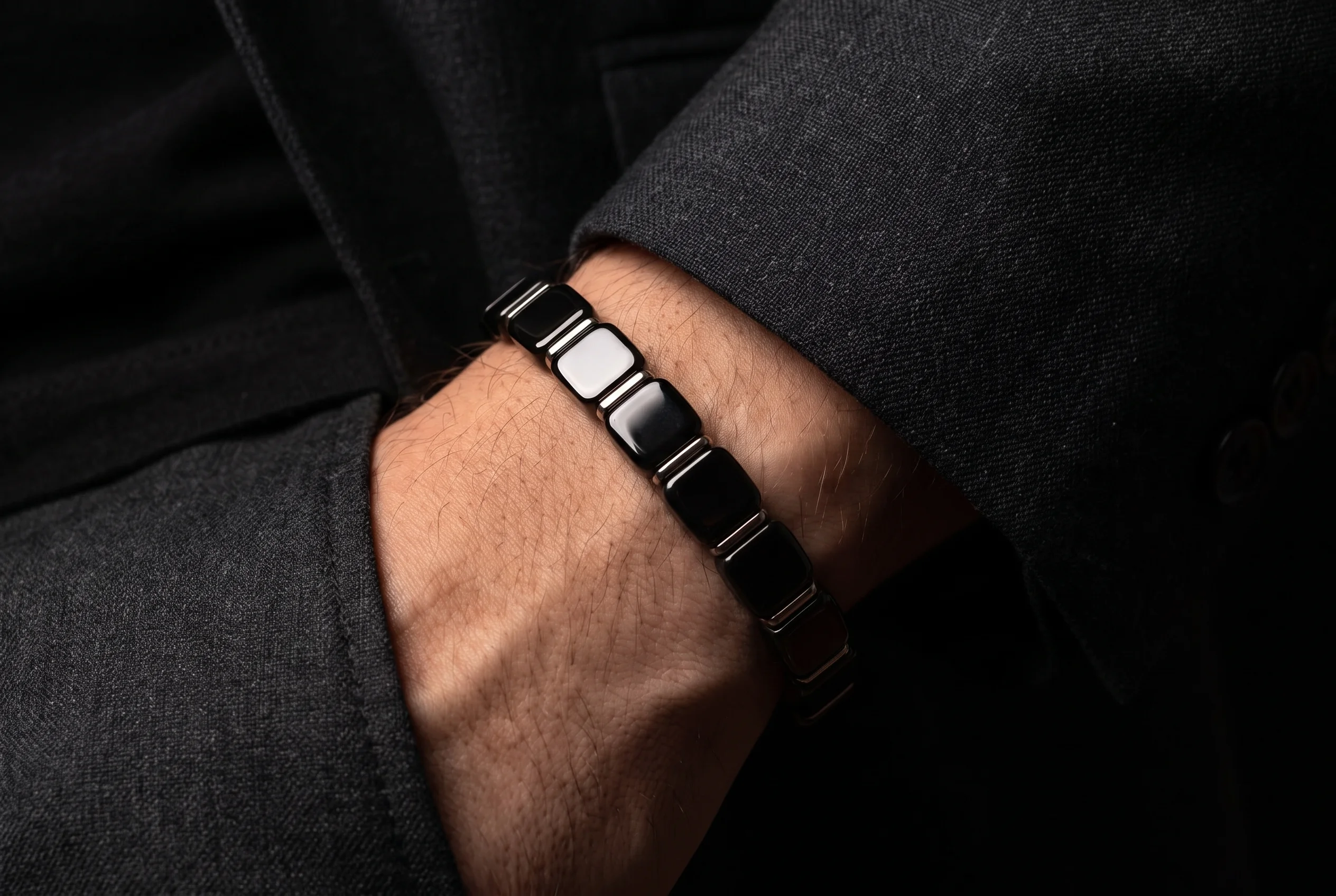
"Black hematite" is one of the most-searched hematite terms, which is a little odd once you know the mineral, because polished hematite jewellery is almost always described as black by default — the name is doing less work than people expect. Here's what's actually going on with the color.
Why hematite reads as black
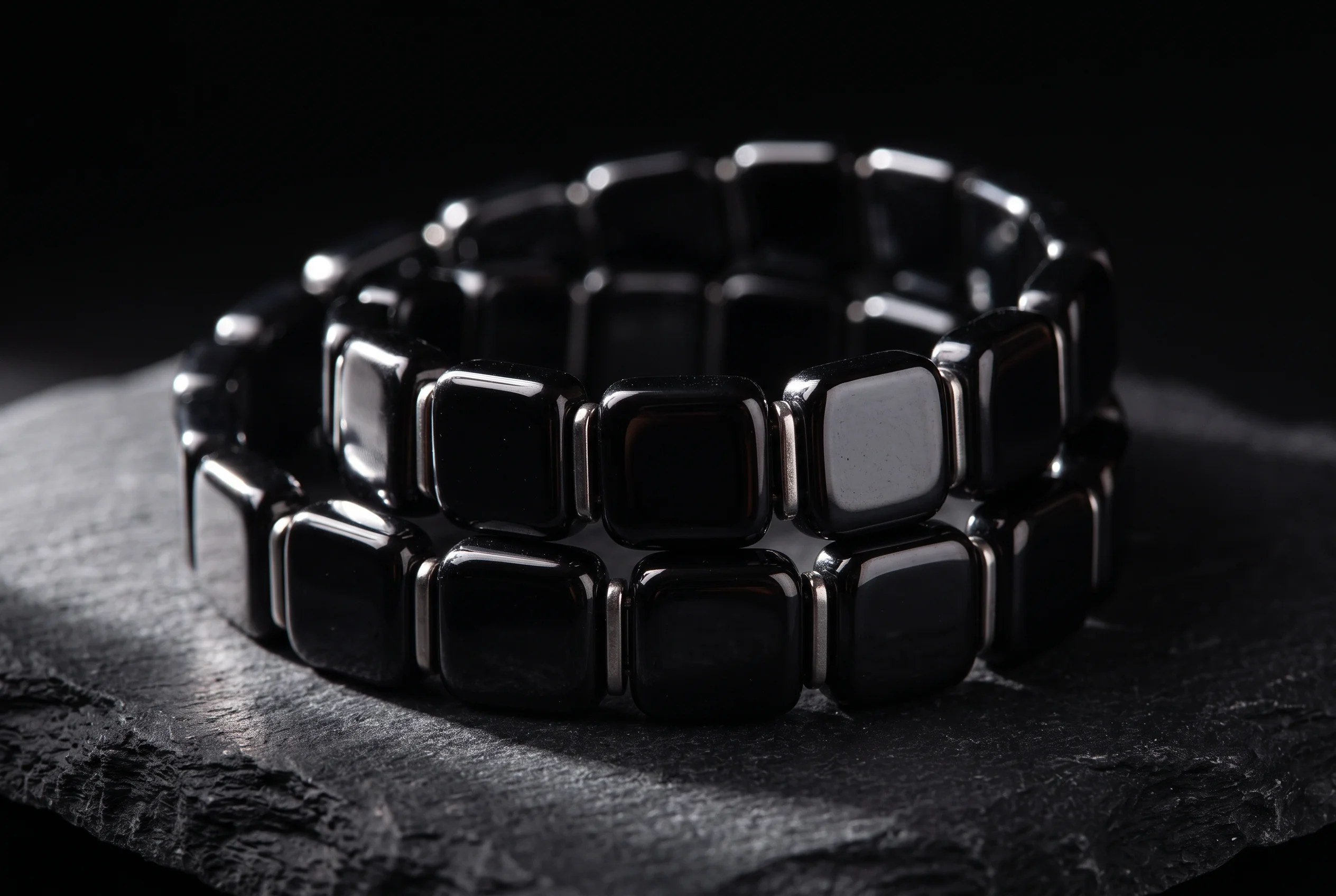
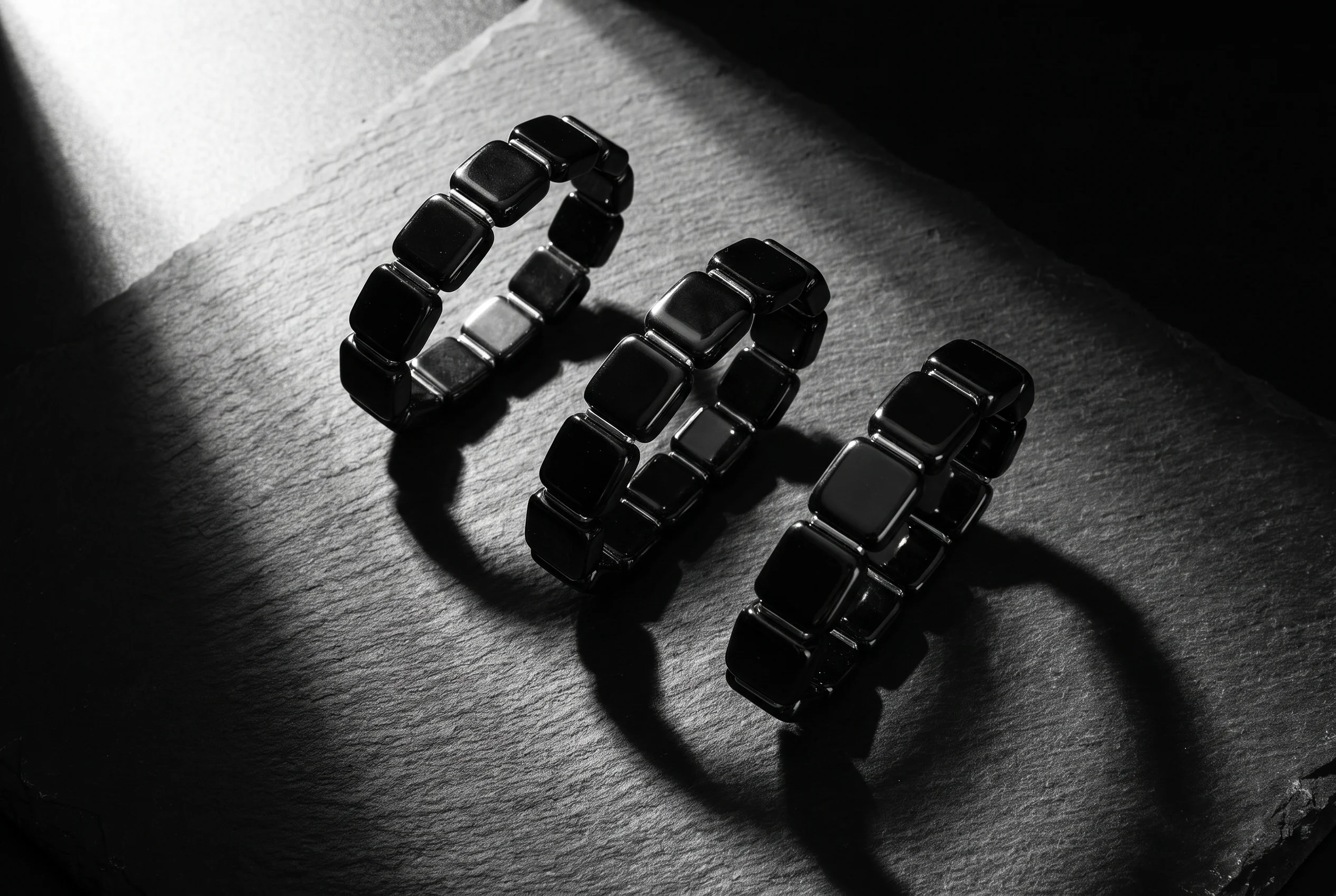
In its polished, metallic form — the finish used for beads and jewellery — hematite has a silvery-black to iron-grey surface, sometimes described as gunmetal. That's the form most people mean when they say "black hematite," even though it's really just hematite in its common jewellery finish rather than a separate variety. Under direct light, a genuine piece shows a metallic sheen rather than a flat matte black, which is one way to tell it apart from black-dyed glass or resin at a glance.
The streak is always red-brown, regardless of the surface color
This is the fact that actually matters for identification: no matter how black a piece of hematite looks on the surface, scratching it against an unglazed ceramic tile leaves a deep red-brown streak — the same iron oxide that gives rust its color. That streak is where the name comes from: Greek haimatites lithos, "blood-like stone," coined by the naturalist Theophrastus around 300 BCE, describing the streak rather than the surface. Mineralogists still use the streak test as the standard way to confirm a piece is genuine hematite.
"Black hematite" vs. "red hematite"
"Red hematite" usually refers to hematite in its earthier, less-processed form — ochre, or specimens with a duller, rustier surface rather than the polished metallic finish used in jewellery. Both are the same mineral, Fe₂O₃; the difference is finish and form, not a different variety of stone. Jewellery-grade beads are almost always cut and polished to the metallic black finish, because it's the more durable, more attractive surface for daily wear.
How to tell real black hematite from a dyed imitation
- Metallic sheen, not flat black. Real hematite catches light with a distinct metallic quality. Dyed glass or black onyx reads as flatter and more uniformly matte.
- Weight. Iron oxide is dense — a genuine bead feels heavier in hand than its size suggests.
- The streak test. Red-brown on unglazed ceramic, every time, regardless of how black the surface looks.
If you want the genuine metallic-black stone, the Hematite Men's Bracelet is natural, polished hematite — real surface color, real streak underneath.
Frequently asked questions
- Why is hematite called black if its streak is red?
- The name refers to two different things: the polished surface, which is a metallic silver-black to grey-black, and the streak (the mark left when scratched), which is always red-brown regardless of surface color — the actual origin of the Greek name "blood-like stone."
- Is black hematite the same as red hematite?
- Yes, chemically — both are iron(III) oxide, Fe₂O₃. The difference is finish and form: black hematite is the polished, metallic jewellery finish; red hematite usually refers to the earthier, less-processed ochre form.
Free tracked shipping worldwide · Free fix for damaged, missing, or wrong items
Shop the collection