Protection Bracelets for Men: Tradition, Not a Talisman
"Protection bracelet" is one of the most-searched phrases in men's jewellery, and it is also one of the most misunderstood. It does not mean armour. It means a small, worn object that carries meaning for the person wearing it — a tradition that predates the phrase itself by centuries.
Where the idea actually comes from
Carrying a stone, a coin, or a cord for protection shows up independently across an enormous range of cultures — evil-eye beads in the Mediterranean and Middle East, red string traditions in East Asia, hamsa charms in North Africa, and black stones like tourmaline and obsidian in Western folk and New Age traditions alike. These traditions developed separately, which tells you something: the impulse to wear a small deliberate object before doing something hard is close to universal, not a modern marketing invention.
The stones men actually reach for
- Black tourmaline (schorl). Naturally opaque black, genuinely hard (7–7.5 Mohs), and — unlike most "protective" stones — has a real, documented physical property: it is pyroelectric and piezoelectric, meaning it develops measurable electrical polarity when warmed or squeezed.
- Obsidian. Volcanic glass, sharp-edged in its raw form, associated in several traditions with cutting away negative influence.
- Hematite. Dense iron ore with a metallic grey-black sheen, often paired with grounding rather than protection specifically.
- Black onyx. Usually dyed chalcedony, worn more for its uniform black colour and associations with strength and self-control than any specific claim.
What we will say, and what we will not
We will say this plainly: nothing on your wrist protects you from a bad outcome. A protection bracelet does not replace a seatbelt, a doctor, or good judgement, and any brand implying otherwise is making a claim it cannot back up. What a bracelet like this actually does is smaller and, we think, still worth something — it is a physical reminder, chosen deliberately, that you carry into a hard meeting, a long flight, or a day you needed to feel more solid walking into. That is a real psychological function even if the stone itself has no causal effect on the outcome, and it is the honest reason this category exists.
Buying one without buying into a false claim
Look for a seller who tells you what is fact (hardness, weight, whether the stone is natural or dyed) and what is tradition (why people wear it) as two separate things, not blended into one paragraph designed to sound clinical. If a listing promises it will block negative energy or improve your health, that is marketing, not mineralogy.
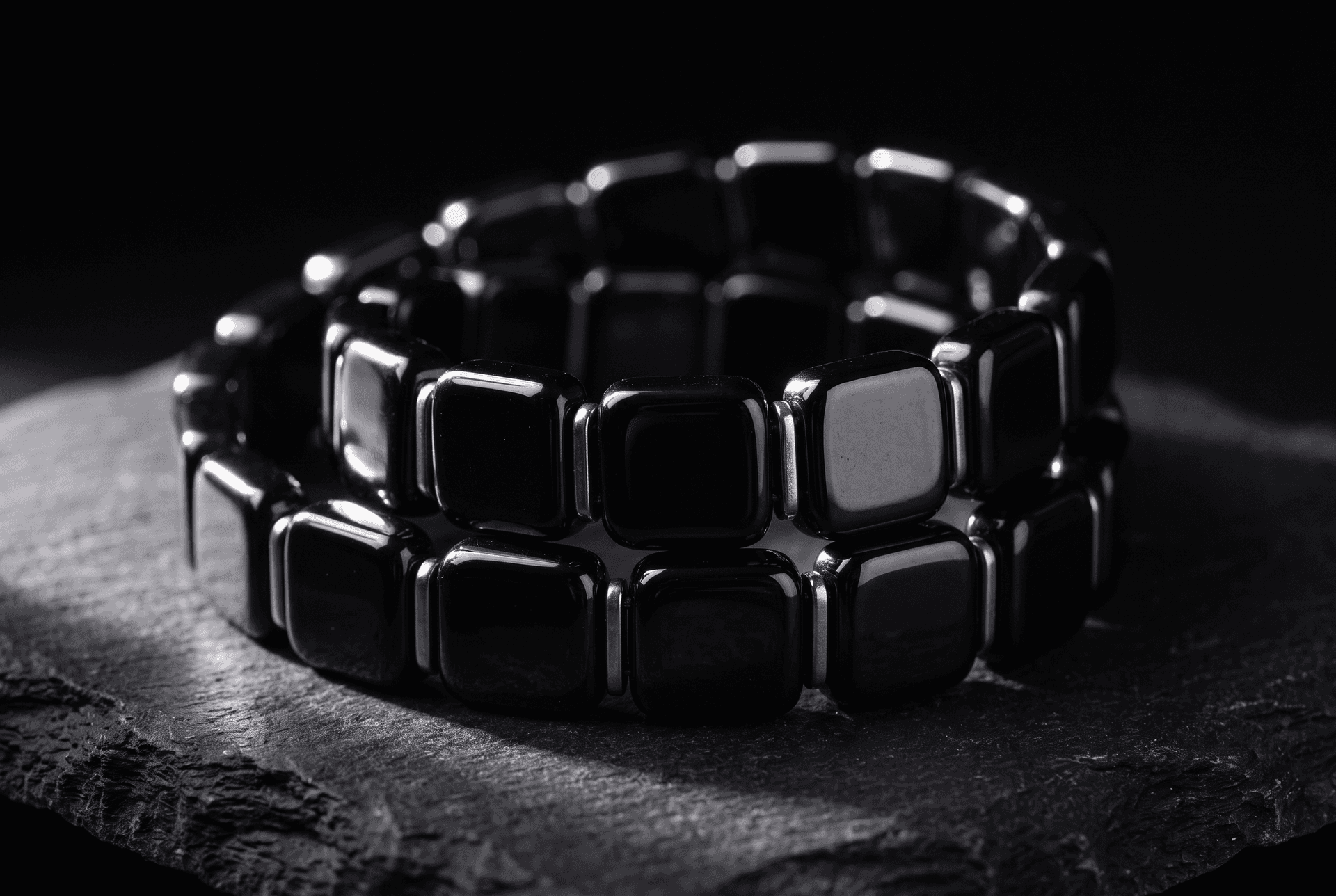
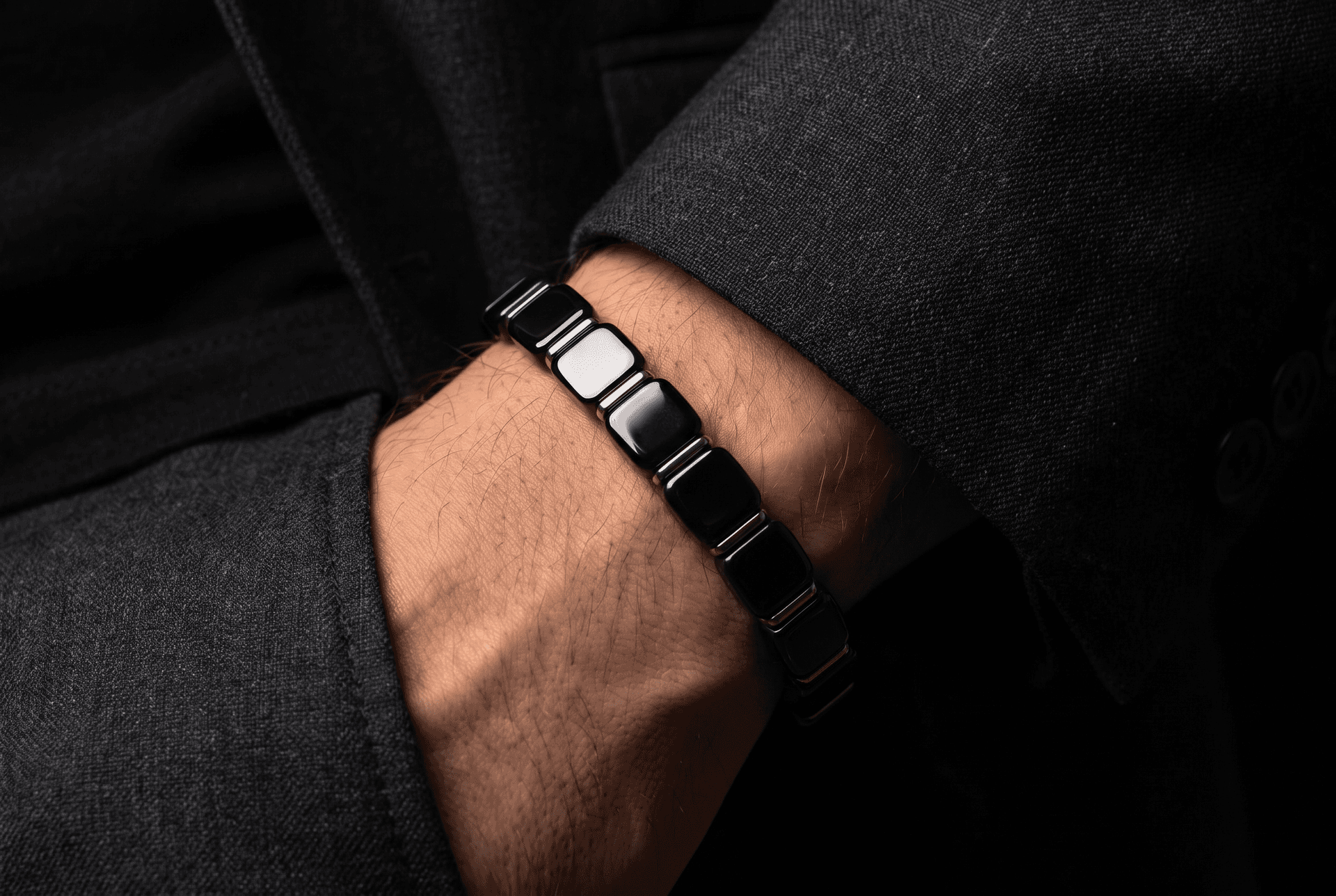
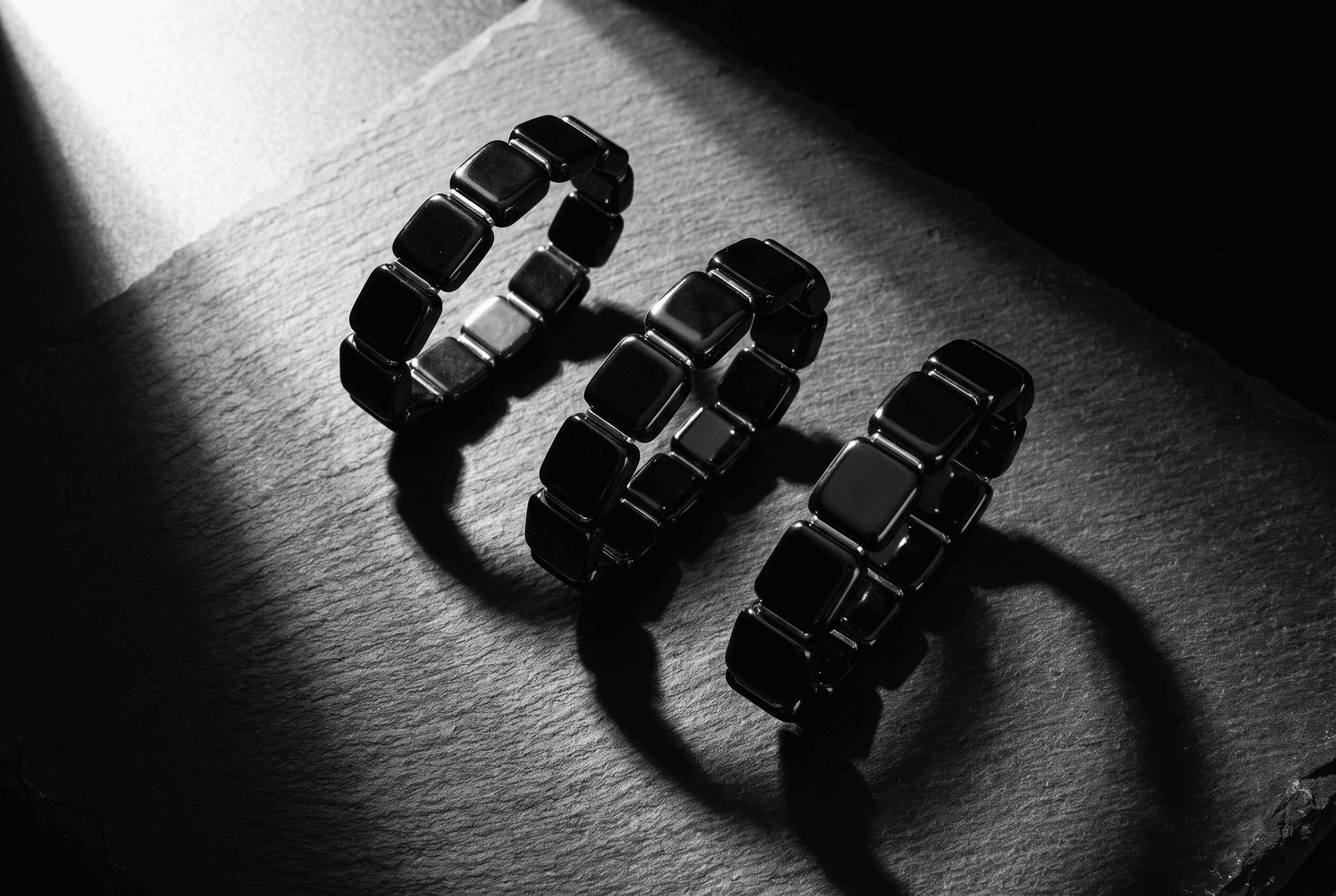
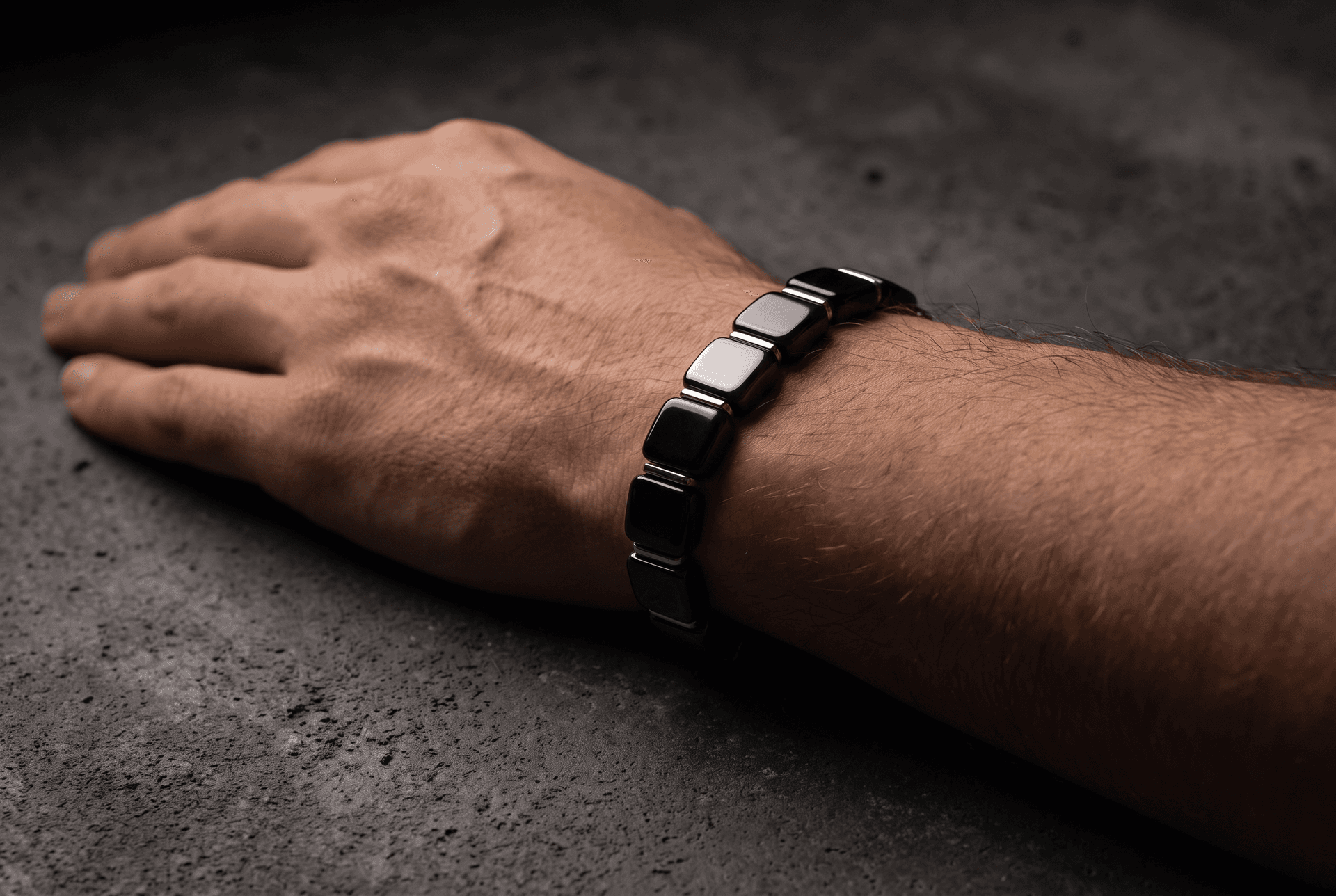
Our own approach: The Tourmaline Band is natural schorl, sixteen square-cut stones, 40 grams, elastic fit — sold as what it actually is. Read more on the stone itself in our black tourmaline benefits guide.
Free tracked shipping worldwide · 30-day returns, no questions
Shop the Tourmaline Band